

Are the Impossible and Beyond Meat Burgers Better than Meat?



I get so many questions about today’s hottest plant-based meat alternatives, Impossible and Beyond Meat Burgers. In fact, you can see a bunch of media hits where I recently shared my take on meatless burgers, including Livestrong and The List TV Show. As a plant-based dietitian and journalist based in California, I’ve had a chance to get to know these burgers quite well. I visited Beyond Meat when they were at a small location in Hermosa Beach, with just a few employees. (Oh, why didn’t I invest!) And, I was invited to taste Impossible Burger before anyone else got a chance. These plant-based burgers are super exciting, and they are just soaring in popularity. So, that’s why I’m answering your top nutrition questions on the hot topic of trendy meatless alternatives today. Are these burgers any healthier than traditional meat patties? Do they contain any ingredients you should be avoiding? Is one meatless burger better than another? Read on to get my expert take on these trendy new products.

Are Trendy Meat Alternatives Better than Meat?
There are lots of new meatless burgers popping up in supermarkets, restaurants, and even fast food establishments. But today, I am focusing on two of the most popular products, the Impossible Burger and the Beyond Meat Burger, comparing them side by side with a standard beef burger.
| Impossible
Burger |
Beyond
Burger |
Beef
Burger |
|
| Serving Size | 4 oz | 4 oz | 4 oz |
| Calories (kcal) | 240 | 250 | 230 |
| Protein (g) | 18 | 20 | 17 |
| Fat (g) | 14 | 18 | 18 |
| Saturated Fat (g) | 8 | 6 | 7 |
| Cholesterol (mg) | 0 | 0 | 60 |
| Sodium (mg) | 370 | 390 | 84 |
| Fiber (g) | 3 | 2 | 0 |
Nutrition information from product website and USDA data
Comparing Nutrition Facts
The Impossible Burger is quite similar in nutritional value to a standard beef burger in terms of calories, protein and saturated fat. The Impossible Burger has more fiber (a good source in fact), as beef burgers have no fiber. And the Impossible Burger has no cholesterol, while the beef burger has about 60 mg. Impossible Burgers have a little more sodium, as they are seasoned. If you seasoned your burger, it would have similar levels. However, the difference between home-made or whole plant-food veggie burgers is more dramatic; they have much more fiber, lower levels of saturated fat, and often lower levels of protein.
The main issue with the Impossible Burger is the coconut fat, which raises saturated fat levels, and this is linked with higher blood cholesterol levels. It’s quite high in saturated fat, providing 8 grams, which is 40% of the DV for the whole day. However, if this is your only main saturated fat intake for the day, it shouldn’t be an issue. If you’re eating sources of saturated fat all day long, that can put you over (on average you should get no more than 22 g per day). But remember that the beef burger has close to the same levels.

I don’t think there is evidence to suggest that soy protein concentrate, the main ingredient found in the Impossible Burger, in moderation is a health risk unless you have an allergy, which is pretty rare. I haven’t seen any research that suggests plant heme, the highly publicized, innovative component found in Impossible Burger that gives it a “meat-like” flavor, is linked with health risks. This compound occurs naturally in many healthful plant foods. The Impossible Burger uses heme from soy.
The Beyond Meat Burger has a similar nutritional value to Impossible Burger. It’s about the same in terms of calories, fiber, and protein—it’s a little lower in saturated fat, but it’s still pretty high in it, by way of coconut fat. Again, it has more fiber, no cholesterol, and moderate sodium levels compared to a beef burger. Beyond Meat is made of pea protein, which is a healthful protein source. It doesn’t have the heme added to it.

Beyond Nutrients
Sure, the nutrition facts can be similar to beef. But there are other reasons to choose Impossible Burgers and Beyond Meat Burgers, as well as other meat alternatives, as outlined below:
- They are linked with a significant reduction in environmental inputs—Impossible Burger has an 89% smaller carbon footprint than beef.
- Choosing these alternatives means you support the elimination of the suffering of animals in agriculture.
- You reduce the negative health effects of eating high amounts of red meat, which has been well documented in the literature. High red and processed meat (bacon, sausage, ham) intake has been linked with increased mortality, heart disease, colorectal cancer, and diabetes.

Beware of Toppings
When ordering at a restaurant, be aware that you can make a plant-based burger just as decadent as a beef burger because of toppings, like mayo, cheese, bacon, and other high-fat additions. Plus, if you down fries and a cola with it, you are piling on more unwanted calories, sugar, and sodium. Don’t give these meatless alternatives a health halo. Include a lot of veggies with your veggie-burger, as many as they’ll give you at a restaurant: lettuce, tomatoes, onions, cucumbers, avocados, sprouts, herbs, peppers, etc. Enjoy it with a whole grain bun if possible and have a side salad instead of fries to lighten your meal up. Check out my blog on how to dress up veggie burgers for more ideas.
Healthier Alternatives
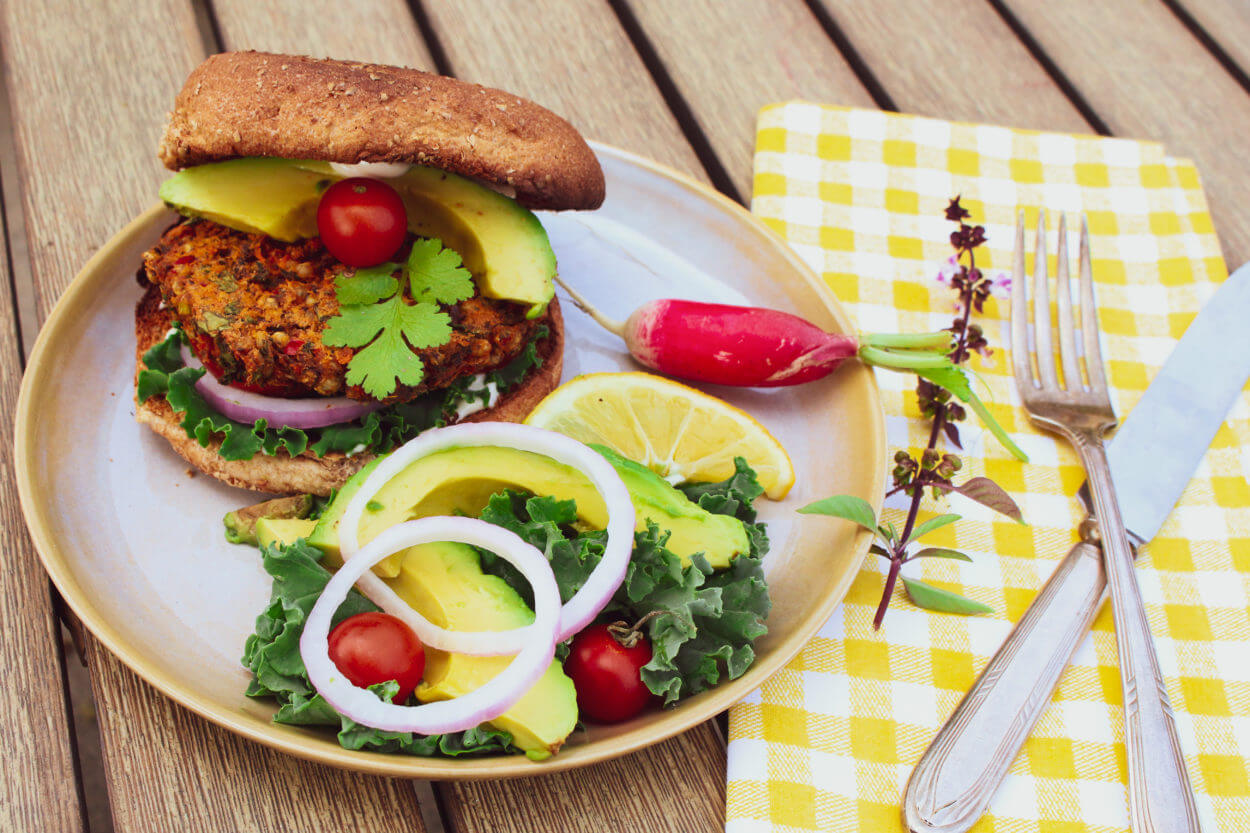
As a healthier option, I love to recommend making your own homemade veggie-burgers—these are so easy to make. I use beans, whole grains, herbs, seeds, and nuts, then shape them into burgers, bake them, and enjoy them all week long. One of my favorites recipes is Spicy Sorghum Sweet Potato Veggie-Burgers (pictured above). There are also many brands of prepared veggie-burgers made with whole ingredients, such as beans, grains, and veggies.
There is nothing wrong with enjoying an Impossible Burger or Beyond Meat burger every once in a while—this is a great gateway choice into a more plant-based lifestyle. But make sure to move beyond these options to include more healthful meals made with whole plants, such as simmered lentils, curried chickpeas, whole grains pilaf, and roasted veggies. This is the true picture of a healthy plant-based diet.

Plan a meal based on whole plant foods, such as these Herbed Lentil Patties with Mushroom Sauce served with mashed potatoes and a side salad.
For other meatless burger recipes, try some of my favorite recipes:
Chipotle Black Bean Quinoa Veggie Burgers
Edamame Ancient Grain Veggie Burgers
Faro and White Bean Veggie Burgers
Written by Sharon Palmer, MSFS, RDN with Ally Mirin, Dietetic Intern