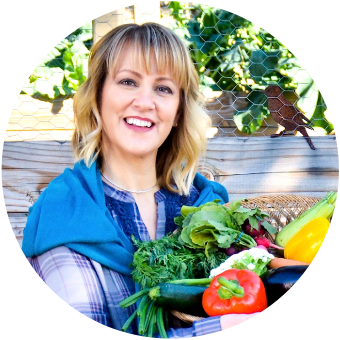
Let’s give a warm welcome to SeAnne Safaii on my Plant Chat today! SeAnne Safaii, PhD, RDN, LD is an Associate Professor of Nutrition and Dietetics at the University of Idaho and the author of the newly released book, The Alzheimer’s Prevention Food Guide. She is a nutrition communications professional, a registered dietitian and educator. SeAnne has been focused on conducting research on aging and diet, specifically as it relates to centenarians from around the world. Her work has been featured in the Food & Nutrition Magazine and Diabetescare.net. She loves sharing nutrition information in the media, writes for three newspapers, makes appearances on local television networks and has a series on the eHow Network. She is a recipient of the Academy of Nutrition and Dietetics’ Young Dietitian of the Year Award, the Outstanding Dietitian Award, and most recently the University of Idaho Community Outreach and Engagement Award.
An important aspect of SeAnne’s life is family: her husband, daughters and sons. Together they lead a very active lifestyle cycling, running, skiing, and just about anything that gets them outdoors. One of her favorite foods is pizza and she hopes to see her 100th birthday! It was so much fun to learn more about SeAnne, as well as her best advice for eating for healthy aging, as we sat down to chat with her.
What inspired your personal interest in the link between diet and aging, specifically Alzheimer’s?
I have always focused my dietetics practice and research on prevention. I truly believe that food is medicine and try to instill this message into my students. I had been researching the diets of centenarians with my partner Sue Linja, a gerontology dietitian and we started noticing trends in these 100 year olds, specifically, most of them were incredibly sharp. Both Sue’s mom and my mom developed Alzheimer’s Disease, so naturally our research segued into the study of brain health and prevention. This disease is the 6th leading cause of death in the US and if there is a way that we could help prevent this we wanted to contribute. We compiled our observations and current research related to nutrition and brain health and published a book called The Alzheimer’s Prevention Food Guide. So, I suppose what inspired us, was the struggle we saw our mothers go through.
What does the science say about the links between diet and Alzheimer’s?
The connection between consumption of the current Western diet and the development of Alzheimer’s is becoming more evident and the research for making beneficial changes to one’s diet is more compelling. It is interesting to note that as other countries develop Western Diet habits, their incidence of Alzheimer’s goes up as well. Emerging research is just beginning to uncover the dietary influences on this disease. The brain is the most complicated system in the body, connecting every organ and function necessary to live. Because the brain is always “on” how we fuel it is extremely important. Most of the science related to diet and Alzheimer’s points to the benefits of eating a plant-based Mediterranean type of diet, similar to what we see recommended for heart disease
While conducting your research, did anything in particular stand out to you as particularly powerful?
I don’t think we realize how important polyunsaturated fats (omega-3 and omega-6 fatty acids) are for brain health. Although we need both types of fatty acids, The omega3’s play a huge role in preventing inflammation. Dietary consumption of omega-3 fatty acids and its effect on the brain is one of the best-studied interactions between good and brain evolution. Docosahexaenoic acid (DHA) is a vital and abundant omega-3 fatty acid in brain cells; however, the human body is not efficient at synthesizing DHA. Therefore we are largely dependent on DHA which is highest in fatty fish such as wild-caught salmon. DHA is important in reducing beta-amyloid plaques, which are abnormal protein deposits in the brain and a hallmark of Alzheimer’s. The anti-inflammatory properties from eating a plant-based diet were also reinforced in our research. We knew this was important, but I’m not sure we understood how important these were to preventing inflammation in the brain before we began our research.
What are your best tips for living a healthier lifestyle for positive aging and cognition?
Sue and I have always been big plant-based diet promoters, but our research with centenarians has only reinforces this message. Most of the people we interviewed centered their meals around plants—and most of these came from their gardens or their local markets. As we age, soup becomes an important way to get vegetables into the diet. For centenarians, soup was a daily must have. But we coined it the “perpetual soup” because it was ever changing depending on what was in harvest at the time.
Another important tip for healthy aging is movement. Daily activity, whether it be walking, working in the garden, washing clothes, walking up stairs, etc., any activity that gets people out and moving is good for the brain and the spirit.
Are there particular foods and nutrients that you recommend consuming on a regular basis?
Middle-aged and elderly people or those showing early signs of memory loss should eat a variety of fresh vegetables, fruits, whole grains and cold-water fatty fish. This eating pattern resembles the Mediterranean Diet. Here are a list of foods that we recommend in our book:
One or more servings of leafy greens per day
Four or more servings of other vegetables per day (2-3 different colors)
Three servings of fruit per day
One serving of legumes per day
At least three servings of whole grains per day
At least 1 serving of nuts or seeds per day
Use olive oil daily
3-4 servings of fish per week
One fermented food daily
Daily green tea or coffee
What does a normal day of health and wellness look like to you?
I always start my day with a cup of coffee and later in the morning a cup of tea. I know that as I get older, it is important to spread my protein out throughout the day. I try to have a breakfast with at least 20 grams of protein and that usually means I need to rely on dairy and nuts added to my cereal or oatmeal. I also try to get a fruit in there. One of my biggest challenges is getting a serving of fermented food in each day. Since I am not a huge fan of kombucha, I usually rely on yogurt with live cultures. The rest of the day is pretty easy and filled with vegetables and fruits. We always have salad on the dinner table. That ensures getting those important, brain healthy greens in every day!
What are some of your favorite plant-based foods?
I know this sounds typical of a dietitian, but I truly love salads, especially in the summer. There are so many different ways to serve salad—Asian salad, César salad, cabbage salad, cucumber and tomato salad, fruit salad. They are so fresh, cool and delicious in the summer time and they are ever changing depending upon what is in season. I try to stay with local produce and base my organic purchases around the Dirty Dozen list. In the winter, I still eat salads, but they are a little heartier, I will add roasted squash or brussels sprouts, nuts and feta to salads for a bit of fall flavors.
SeAnne shared one of her favorite plant-based recipes with us.
In a large bowl, combine the red and green cabbage, carrots, and cilantro.
In another bowl, whisk together the peanut butter, sesame oil, soy sauce, chili sauce, chili flakes, honey, lime zest, and lime juice. Stir in the water until the dressing is smooth and set aside.
Pour the dressing over the cabbage mixture and toss to coat. Garnish with chopped peanuts and serve chilled.