

Do Calories Really Count?
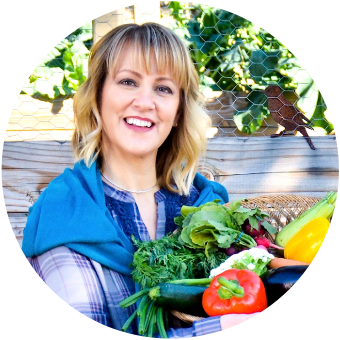

Sharon Palmer addresses the confusion and questions over whether calories really do count, and how you should manage calorie intake for health.
I get so many questions on whether calories really do count, and whether people should “count calories”. There is a great deal of confusion over this topic, and the best strategies in order to understand calorie intake in order to achieve healthy weight goals. That’s why I’m answering your top questions on this topic.
Question: I’m seeing so many sources say that calories don’t really matter anymore. So, what’s the deal, do calories still count?
Sharon’s Answer:
There is so much confusion over calories. A myth is going around that they don’t count at all, yet of course they do. Although they are not equal, for example, a calorie worth of jelly beans is not the same thing to the body as a calorie worth of fruit (which comes packed with nutrients and fiber), the simple math of calories in vs. calories out holds true. If you consume more calories (which are essentially units of energy or fuel for the body) than your body requires, your body will store them as fat.
That said, our old nutrition concept that 3,500 calories equals 1 pound of fat has been viewed in a new light. That’s because way too many factors come into play as people lose weight. There are dramatic metabolic differences between individuals, and your rate of metabolism (the rate at which you burn calories) declines—sometimes dramatically—as you lose weight, according to recent research. This is because our bodies are ingenious; we evolved over time to survive. So when times were tough and we had food shortages, we could survive with fewer calories. We haven’t had sufficient time on our evolutionary journey to adjust to our constant 24/7 barrage of excess calories coming in. Consequently, many people struggle with overweight and obesity today. Sadly, this metabolic decline makes it tough to lose weight and keep it off.
Another myth has grabbed hold that supports carb calories as being somehow worse than other types. On the contrary, carb calories are just fine, and in fact, they are the body’s desired source of energy. It’s the type of carbs that matters more. If you choose minimally processed carbs—beans, whole grains, fruits, vegetables—they can actually help you control weight because they provide satiety.
Technically speaking, you could eat anything and lose weight (i.e. The Twinkie diet!), as long as your caloric intake is lower than your energy needs. However, there are a few factors that must be considered. Now we know that minimally processed plant foods slightly resist digestion, thus we gain fewer calories from them than we once thought—perhaps up to 15-20%, depending on the food. The fiber in the foods—whole grains, beans, nuts—help block the digestibility of those foods. There are also other issues, like satiety. If you eat 1000 calories per day of donuts, you wouldn’t get very many to eat and you’d be hungry, but if you ate 1000 calories of whole plant foods, you’d get a lot of fiber and volume, thus be much fuller. And in the end, people really must stop focusing only on calories and quick and easy weight loss, because we should think of our health over the long term. If you want to live a full, vibrant life with a lower risk of disease, then you should eat a nutrient-rich, balanced, plant-based diet—which can also promote healthy weight.
Should you count them on a daily basis? Well, there are many studies that show that people who journal their food intake are more successful at achieving and maintaining a healthy weight. So that could mean writing down what you eat in a diary or using an app. However, I think many other benefits besides calorie counting factor in, especially mindfulness. By writing down what you eat, you are becoming more in tune with what you put in your mouth, and recognize all of those little bites here and there that you might not otherwise notice. However, this doesn’t work for everyone. If eating behavior becomes overly obsessive, then it might not be beneficial for you.
What about “negative calorie foods”? In fact, there is no such thing as “negative calorie foods”, however many vegetables are very low in calories. For example, radishes, greens, celery, and cucumber are all very, very low in calories. I tell people not to even worry about calories in these non-starchy vegetables, as they are so low they don’t really matter. That’s the beauty of vegetables, you can fill up on them for so few calories.
If you’re interested in learning more about the calorie contents of foods, check out this source from the NIH: https://www.supertracker.usda.gov/bwp/.
Eat and Live Well,
Sharon Palmer
Check out the other nutrition questions I’m answering at The Plant-Powered Dietitian:
How to Prepare Dried Beans to Avoid Antinutrients
Does Roasting Veggies Ruin Nutrients?
Is “Clean Eating” a Healthy Lifestyle?

