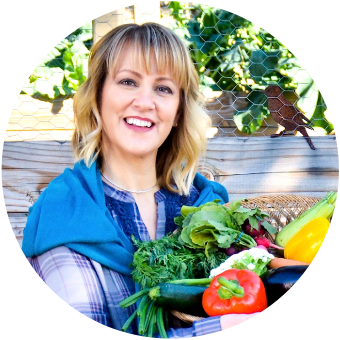
I am thrilled to have plant-based colleague Mark Rifkin, MS, RD, LDN on Plant Chat today! Mark holds a Master’s Degree in health education and is a registered dietitian in the Mid-Atlantic area. Through group presentations and online services, he focuses on plant-based diets to prevent and treat chronic diseases and nutrient deficiencies. He also presents on other topics, such as reducing food costs and food sustainability issues. He has been presenting on nutrition and food-related topics since 1997, and has been vegan since 1986. Continue reading to learn more about Mark’s work as a plant-based advocate for health.
What inspired you to become a registered dietitian?
I became vegetarian (and then vegan) while in college in the mid-80s, followed by 8 years of animal activism. I was inspired to become an RDN after witnessing how ineffective that animal activism was in effecting behavior change. I concluded that the best way to help the animals and the environment was to directly help people create and sustain behavior change. After exploring various alternatives, I decided to return to college in the mid-90s for 1) a MS in Health Education, followed by 2) undergrad coursework in dietetics. I became a licensed RDN in 2005 at age 41.
How do you feel plant-based nutrition impacts health? Are there a few examples from your practice that you can share?
P-B nutrition impacts health in reducing risks of most major chronic diseases—particularly the conditions generating the vast majority of ill health and related expenses. And for the vast majority of conditions, reversing the conditions that cause disease also reverses disease, in general. The mechanisms for these processes are based not only in minimizing risk factors (such as inflammatory compounds, additives, sat fat, sodium and refined sugars), but also optimizing protective factors (such as soluble and insoluble fiber and phytonutrients, as well as common vitamins and minerals), aka, nutrient density. After all, all nutrients (with the exception of vit D) originate in soil or plants–farmed animals create no nutrients, and in some cases, are vegan themselves. Meanwhile, traditional nutrition recommendations have been limited to only the first part (limiting or avoiding dietary risk factors), which, at best, only decelerates (but does not stop or effectively treat) the disease process. Additionally, while politicians and policy wonks struggle with twisting, turning and tweaking the system to reduce healthcare costs, the answers are obvious and fairly simple (in concept)–diet and lifestyle. Consumer education, motivation, compliance and support, along with system logistics and insurance coverage, are where the challenges lie.
In a past career setting in a Federally Qualified Health Center, I had a patient who was being medically treated for hyperlipidemia. I convinced him to limit meat and introduce beans several times weekly. In just a few months, his cholesterol dropped fifty points—-with no change in medication, which he was eventually able to reduce.
In my FB group (Ask a Vegan Dietitian), I offer online and private-session advice to help members’ with various health concerns. People routinely post how I helped them address various issues, esp. hair loss, anemia, general nutrition questions, weight loss/gain, etc. A recent member quote: “I feel like I need to tell everyone here that I got so much out of my session with you! Some of the things you told me, I had NO idea about until you enlightened me, even after having been vegan for several years. It was both fascinating, and so helpful.”
What is your personal nutrition philosophy?
My personal nutrition philosophy is a based on a few key principles:
*Prevention is worth far more than a pound of cure.
*Food is medicine.
*Balance, variety and enjoyment of food are just as important as nutrient density.
*Control of food and its ingredients is generally proportional to the amount of time and effort expended by the consumer to plan/acquire/prepare it.
*Balance also applies to foods supplying discretionary calories. Perfection in a meal pattern is neither expected, nor required, to obtain the optimal benefits.
*For every macro- and micronutrient, there is a minimum intake necessary to generate a benefit, and (in most cases) a maximum intake which should not be exceeded.
*Food first, supplements only if/when necessary.
*Read and analyze the research yourself, and evaluate it objectively, regardless of whom the author is. No professional (especially those issuing recommendations to the public) is entitled to a free pass on their obligations to present the research objectively, regardless of history, credential, position or title.
*All food processing is not necessarily unhealthy. Added salt, oil and sugar are not necessarily unhealthy.
*Food and nutrition are related to a lot more than just simple sustenance, including emotions/mood, family, habits, convenience, taste, etc.
*The body responds to the conditions created.
*The freedom to choose a certain lifestyle necessarily implies acceptance of all the costs thereof. Governments are not obligated to support bad habits.
What are your best tips for someone who is thinking about trying a plant-based diet but doesn’t know how to get started?
Focus on simple changes, one day at a time. P-B diets are not an all-or-nothing concept; they can be applied to the extent each individual desires. Try mixing a familiar animal protein with a plant protein (e.g., in a soup or stew). Don’t reinvent the wheel—use a familiar sauce on a plant protein instead of the traditional animal protein (e.g, BBQ tofu instead of BBQ chicken). Try not to swallow the entire world of vegan nutrition and vegan lifestyles in one week. Rules set by others need not be yours.
What are your top 5 plant-based foods you can’t live without?
My top 5 foods are beans, tofu, coconut curry, Indian samosas, and Ethiopian berbere lentils.
1/4 – ½ t. red (cayenne) pepper (can also add a touch of chipotle or smoked paprika)
1/4 c. vinegar or ½ c. lemon juice
4 cups cooked pinto beans or about (3) 15 oz. cans low-sodium beans, drained and well-rinsed
Instructions
Heat oil in large skillet. Saute onion and garlic in oil til soft. In a bowl, combine tomato paste, water, sugar, molasses, soy sauce and allspice. Add this mixture to onions, then add remaining ingredients. Simmer 30-40 minutes.