

Plant Chat: Alona Pulde, MD co-author of Forks Over Knives Family
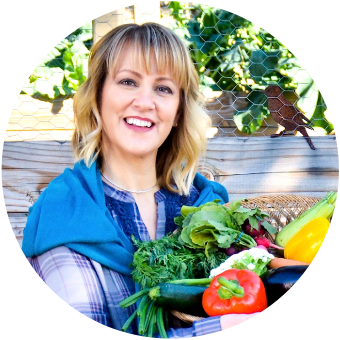


It’s such a pleasure to have Alona Pulde, MD, half of the amazing plant-based duo (along with her husband, Matthew Lederman, MD) who wrote the new book Forks Over Knives Family, on my blog today. They both specialize in nutrition and lifestyle medicine and together they have created a lifestyle-improvement program used in their medical center Transition to Health (based in Los Angeles) and for patients in the film Forks Over Knives. They also coauthored Keep It Simple, Keep It Whole and the New York Times bestseller The Forks Over Knives Plan. Matt and Alona currently live in my hometown of Los Angeles, with their daughters Kylee (age 4) and Jordan (age 2). As if they are not busy enough, the team is also working with Whole Foods Market overseeing various health and wellness projects. Get ready to be inspired with Alona’s interview on plant-based living.
What inspired you to personally take on a plant-based lifestyle?
Initially, it was spending time with doctors implementing a plant-based lifestyle with their patients and seeing the amazing health benefits they were getting. As physicians, Matt and I were very disappointed and disillusioned with the conventional medical system. We both went into medicine in hopes of helping and healing people and found we were doing neither with the limited arsenal (i.e., pills and procedures) we had. Watching patients in just a ten day plant-based immersion lose weight, drop blood pressure, blood sugar, and cholesterol numbers and overall feel more energetic and vital was a game changer. We got into this “business” to help patients actually get better and finally had the tools to do so. And what could benefit our patients would certainly benefit us, so how could we do anything but take on a plant-based lifestyle?
How do you use this lifestyle in your practice as physicians?
We like to take a medical approach that embodies the proverb, “When diet is wrong, medicine is of no use. When diet is correct, medicine is of no need.” As such, we propose nutrition and lifestyle change first and foremost, wherever appropriate (and it almost always is) before pills and procedures. What is so gratifying as a physician is to see that every patient that incorporates a plant-based lifestyle does better, gets better, feels better. The bigger the changes the more dramatic the results, but being and staying on the right trajectory is ultimately what matters.
How did you introduce this lifestyle at home?
We were fortunate that our children were born into this lifestyle, as Matt and I had already adopted it before I got pregnant. So, although they don’t know different from a plant-based lifestyle, we still have similar challenges of introducing new foods, new dishes, and new flavors. We have a number of strategies that have worked for us so far from:
- Basing dishes on already established favorites. For example, our 2-year old loves potatoes. So we try and build meals around potatoes or add them to our dishes.
- Getting creative with meal time. Our 4 ½ year old loves puzzles. So sometimes when introducing a new dish we place her food in such a way that it covers the princesses on her favorite plate. Her job then becomes to eat the meal and thereby uncover the picture beneath.
- Letting our little “directors” lead. We not only take the girls’ shopping with us but we often get them involved in making our meals. In the former, they get to pick some of the foods they want to see on their plates and in their lunches (Jordan loves apples, cauliflower, and whole-wheat pita and hummus; Kylee loves mangoes, veggies burgers, and potatoes). And in the latter, they get to make the dish they then serve us all – which is not only fun for them but they have vested pride and fascination in eating their “inventions.”
What are the unique benefits for plant-based diets for children?
The most unique benefit to children on a whole food plant-based diet is that they start years ahead of adults to nourish their bodies with the most nutritious and health promoting foods available. In this way, they don’t ever have to struggle with being overweight or obese or suffer from so many of the diet induced chronic diseases we are facing today including diabetes, heart disease, and some cancers (which often starts developing in childhood). With the epidemic of diabetes now spreading to our children, heart disease remaining our number one killer, and obesity spiraling out of control with 66% of Americans on a “Standard American Diet” being overweight, 33% of those are obese and about 17% are children – there is no better time than now for everyone (and especially our children) to get on a whole food plant based diet.
What are some of the challenges families can face when it comes to getting the whole family on board with a plant-based diet?
As with any changes in the family, bringing the unfamiliar in and replacing it with the familiar can be challenging. There may be an initial resistance, and possible resentment, to adapting to something new. Some family members may be at different stages with regards to their interest or capacity for transition. While a few may be early adapters ready to jump in 100%, others may need additional time to get used to the idea or never be quite ready for a 100% transformation. Recognizing and addressing the different needs that may arise for your family will make it easier to feel heard and understood and more likely may result in family members being willing to collaborate rather than sabotage.

What are some of the special considerations families should take into account when it comes to a balanced, nutritionally adequate plant-based diet for their children?
The beauty about a whole food plant-based diet is that it provides almost all of the nutrients, both macro (proteins, carbohydrates, and fats) and micro (vitamins, minerals, and phytochemicals) that we need. There are two exceptions: The first, vitamin B12 is not made by plant or animal but instead by a bacteria living in dirt. Animals eating dirt accumulate B12. For those choosing a 100% whole food plant based diet, vitamin B12 should be supplemented. The second is vitamin D which is produced when our skin is exposed to the sun. If you are avoiding sun exposure, it would may benefit you to consider vitamin D supplementation.
Please share some of your best, kid-friendly tips for plant-based eating the whole family will love.
Start your transition by keeping it simple and keeping it familiar. If your kids like cereal in the morning, keep having cereal in the morning and try a variety of non-dairy milks. If they prefer pancakes, try a plant based version. Same for lunch and dinner. Mac-n-“cheeze” or whole wheat bread with your choice of peanut butter and jelly or avocado or hummus with vegetables make fantastic lunches. And a Black Eyed Pea burger and baked fries or a Veggie Pizza can become family favorites for dinner.
Focus on any whole plant based foods they already love. If your child loves cauliflower but won’t touch broccoli, prefers whole wheat pasta over brown rice, or loves potatoes but can’t even look at a sweet potato or squash – then great, you have a ton of equally healthy options to start with that they will be more apt to enjoy!
Keep it fun and positive. Your attitude goes a long way in formulating that of your child’s. If you believe in the health promoting benefits of this diet, remember that even on your current diet you don’t like every dish you make, maintain an open mind to the many possibilities that lie ahead with plant-based food choices, and enjoy the improvements in your own health and well-being- then you will be setting the example that your family needs to be successful.
What are 5 foods that you always have on hand in your home?
We always have fruits (bananas, apples, berries, melons, and mango); vegetables (cauliflower, broccoli, carrots, mushrooms, and salad greens); potatoes and sweet potatoes, whole grains (millet, brown rice, oats, and quinoa as well as whole grain pastas); and legumes (garbanzo beans, black beans, kidney beans).
If people are eating animals that ate plants (grass mostly) to acquire vitamin B12 from bacteria in the ground, why is this bacteria not on the plants we are eating as well?
are you saying the bacteria is not in the plants and plant eating animals are getting their B12 from this soil bacteria because their mouthes come close to the ground, or they constantly ingesting small amounts of soil with their grass and this bacteria is making B12 in their tissue?
why are animals that eat only plants storing B12 in their tissue and not humans that eat only plants, this is the question I think I’m asking.
if all we need is the bacteria in the soil to create our own B12, why not just consume this bacteria like a plant eating animal that is being killed for its flesh?
there’s something missing from the explanation of why vegans are not getting enough vitamin B12
if you made tea from your favorite soil and drank it, would you then be ingesting this beneficial bacteria as well, or a lot of harmful bacteria too?
since there is no pharmaceutical standards for vitamin supplements in the US, how do you know you’re even getting the claimed amount of B12 in a supplement? How do they extract B12 to make these supplements?
Thank you for your detailed questions on vitamin B12. I am going to be posting a blog on B12 on December 15. Humans needs B12 in the diet, which is primarily available through animal foods or supplements for vegans.
Per a published study on B12 in vegetarian/vegans:
Vitamin B12 is synthesized only by certain bacteria, and it is primarily concentrated in the bodies of predators located higher in the food chain [5]. Vitamin B12 is well-known to be the sole vitamin that is absent from plant-derived food sources. Foods (meat, milk, eggs, fish, and shellfish) derived from animals are the major dietary sources of Vitamin B12 [4].
Some edible algae (very specific ones) and tempeh (due to bacterial contamination) have B12. Some Cholerella has B12, but it would have to be clear which ones contain high levels.
https://www.ncbi.nlm.nih.gov/pmc/articles/PMC4042564/
There is not enough evidence to indicate that vegans can get enough B12 through soil. Jack Norris has done some great work collecting all of the information about B12 in soil and other plant sources here:
https://www.veganhealth.org/b12/plant
There is a really good page on B12 on the Vegan Society here:
https://www.vegansociety.com/resources/nutrition-and-health/vitamins-minerals-and-nutrients/vitamin-b12-your-key-facts/what-every-vegan-
I hope that helps! I would like to use your question on my Ask the Sharon post—would you like to receive a prize for being featured? If so, send us your mailing address.
Sharon
Dear Sharon,
Thank you for answering my quiry on B12. I have recently become aware of the vegan society and have read their considerable article on when I was researching B-12.
I’ve since bought a bottle of their VEG-1 suppliment.
there is in this country (the USA) the usual controversy: which cobalamin variation is the most absorbable, (and safe) etc. it is not my intention to include that discussion in this letter, however.
I wanted to tell you that everyone seems to have overlooked the vitamin and mineral assay in sea vegetables.
I try to include in my vegan diet regular additions of Dulse. I also use some Kombu and Wakame. without plugging sources per se, I use Dulse flakes sourced off Nova Scotia and their assay size is 5g (a heaping tablespoon) and it is claimed this contains 173% of the current DV for B-12 (as of July 2016, in the USA, this is 6mmg. my keyboard won’t do the international symbol for micro grams) the other Dulse source from Maine is 7g and this contains 0.46 mg or 460mmg of B-12 and that would correspond to 77 times the DV.
I really don’t think that vegans who can stomach eating sea vegetables like Dulse would have to worry about being short of B-12. you would still have to take a D3 suppliment in northern climes in the winter but it is a myth to say that there are no plant sources of B-12 available for vegans. I’ve also located a Bancha Tea from Japan called Batabatacha that also contains high amounts of B-12. now since we’re talking about a bacteria here not the vitamin itself this has to survive killing levels of heat in making tea for instance or acid in the case of one’s stomach, so these considerations then lead to the question of how this valuable cobalamin can get into your intestine so it can start creating B-12. if one is like 95% of other Sapiens, there is a thing called “intrinsic factor” that starts in your saliva and stomach to protect this cobalamin and assist it to its destination in your small intestines. if you have no intrinsic factor or other reasons why you may test low for B-12 or begining to show signs of an onset of pernicious anemia (with death imminent) a B-12 shot is advised. by mainlining B-12 directly this may be preferable to the plant sources I mention. B-12 shots use a cobalamin variety that is claimed to be more absorbable or efficacious and less poisonous 🙂 than the cheaper and more widely used for supplementation, cyanocobalamin (Cyano rhymes with cyanide)
anyway, it is time to dispel the misinformation about how plants do not supply a source of cobalamin so your body can create its own B-12. if however can’t stand the taste of sea Vegtables, I guess you can take a pill suppliment or get the shot.
Thank you for your thoughtful commentary and research on this subject. Read what Jack Norris says on sea vegetables as source of B12.
https://veganhealth.org/b12/plant#seaweeds
I am hoping to write a thorough article on B12 in the coming months, that will discuss all of the things your raise. There is so much confusion on B12! Even non-vegans are recommended to supplement over the age of 50 as absorption is so poor, per the NIH.
Hi
Just looked at the links below, first one I spotted was https://sharonpalmer.com/stir-fried-thai-sorghum-bowl/, it states that this is gluten free, don’t know if it’s different in the states but soy sauce is most definitely not gluten free in the U.K. Meaning this recipe isn’t safe for coeliacs etc. Not a criticism but felt I should point it out as I’d hate for someone to get sick from eating soy sauce
Hello,
We apologize! There was a typo–it now says gluten-free soy sauce. Thanks for bringing it to our attention!
I became vegetarian 4 months ago, didn’t lose 1 pound of weight and developed anemia, what might have gone wrong?
Here are a few of my best tips for keeping your weight loss on track with a plant-based diet: https://sharonpalmer.com/ask-sharon-why-dont-i-lose-weight-on-a-plant-based-diet/