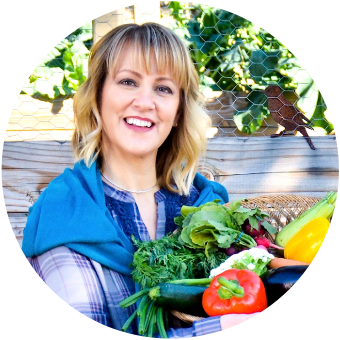
I’m very excited to have Kathleen Flinn, who is very passionate about helping get people back into the kitchen to cook, on my blog today as a special guest. As you know, I do everything I can to help people find their way back into the kitchen to cook up wholesome plant-based meals to enjoy with the people they love. And Kathleen’s Reclaim the Kitchen Initiative is definitely a start in the right direction. Kathleen is the author of the New York Times bestseller, The Sharper Your Knife, the Less You Cry (Viking/Penguin 2007), a memoir-with-recipes about her experiences leaving the corporate world to study at Le Cordon Bleu in Paris – where she fell in love along the way. She has since published two more books, The Kitchen Counter Cooking School: How a Few Simple Lessons Transformed Nine Women into Fearless Home Cooks (Viking/Penguin, October 2011), and Burnt Toast Makes You Sing Good: A Story of Food & Love from an American Midwest Family, a multi-generational memoir-with-recipes about her culinary heritage growing up in Michigan will be published by Viking/Penguin in August 2014. Her books have been featured in Elle, People, Good Housekeeping, The Wall Street Journal, The Christian Science Monitor, CBS This Morning and numerous NPR programs including “Talk of the Nation.” Her last day job was head of editorial for MSN in the United Kingdom based in London. She serves on the board of directors for the International Association of Culinary Professionals. She divides her time between Seattle and Anna Maria Island, Fla., with her husband, Mike, and their trusty rescue dog, Maddy.
Why do you think that Americans are spending less time in the kitchen cooking meals?
I think there are a lot of reasons. Fast food, packaged food and convenience foods are all a big part of the reason. Americans have a strong sense of “time poverty,” that they don’t have enough time to cook. In some cases, this is true; there’s a genuine time crunch for many families in the 4 to 7 p.m. time frame. But often people don’t see the time that they’re allotting to so-called ready-to-eat foods. In a project I did with home cooks, one woman said she simply didn’t have time to cook – but then did little other than dawdle with her phone while she waited 25 minutes for a frozen pizza to cook. Another mom estimated it took her an average of 35 minutes to go pick up fast food for dinner. With a few skills and the right stuff in your pantry, you can eat much better for less with meals prepared in less than that time.
How does not cooking impact health?
I’ll give you an example. One woman in my study decided that she didn’t have time to make breakfast. So she would get dressed and then go to McDonald’s and get an egg McMuffin. She did this pretty much every day. After taking some cooking classes, she realized that a McMuffin is just an English muffin with an egg and some cheese, maybe a slice of ham. “Heck, even I can make that!” she told me. So, she started cooking breakfast at home. At first she replicated the breakfast sandwich. Then, she started to scramble eggs with some fresh spinach instead of using ham. She discovered breakfast could be a slice of bread with peanut butter and a piece of fruit. She also ditched the greasy hash browns when she cooked at home.
She estimated that she saved more than $1,000 in less than the first year she did this. But I estimated that she saved herself more than 200,000 mg of sodium, more than 100,000 calories and nearly four pounds of saturated fat.
What are your top three tips for helping people get into the kitchen and cook meals?
Get a good knife and learn how to use it. I’ve got a video lesson online!
Learn to make four or five simple dishes and keep the stuff on hand. An easy breakfast dish, a simple pasta, steamed vegetables, your favorite curry. You don’t have to know how to cook everything.
I’ve partnered with Wolf to spread the message that home cooking isn’t hard, yet it yields so many great rewards. This is particularly true when you cook with other people, and then share those meals together. The idea is to get people to cook just one more meal a week than they do now. It might be the only home-cooked meal they do in a week – and that’s OK!
What are some of the barriers that people face when cooking?
I think a big issue is confidence. A lot of people just feel that they don’t know how to cook. In an era of celebrity chefs and competitive shows, some people now think it’s this rarefied skill rather than just a simple task that all of us can do. But I tell people that hey, no one is going to walk into your kitchen and tell you to pack your knives and go. I want people to be fearless. It’s OK to stumble through a recipe and to make mistakes. It’s only one meal, hopefully you’ll make another one tomorrow. When you learn to do anything, you’re not a master when you start. You fall off the bike, you swing and miss the ball. And that’s OK. Start simple and build skills.
Here’s one of Kathleen’s favorite plant-powered recipes.
This savory and sweet soup can be served at any temperature, but it’s excellent chilled. Immersion, or “stick,” blenders are great for soup because you can plunge them directly into the pot. Hot soup can create a vacuum in conventional blenders, so if you use one, let the soup chill slightly first, and then take the cap off and cover with a towel. Running soups through a food mill is a low-tech option. If you have none of the above, simply mash the softened vegetables with a fork or potato masher; it will lend a rustic feel to the finished product. Add the rosemary, branch and all, but be sure to remove it before pureeing.
Ingredients
Scale
2 tablespoons olive oil
1 medium onion, chopped (about 1½ cups)
2 leeks (white and light green parts), chopped
1 pound carrots, diced
Several fresh rosemary sprigs
1 bay leaf
2 quarts vegetable stock
Coarse salt and freshly ground black pepper
Pinch of cayenne (optional)
Croutons (optional)
Instructions
Heat the olive oil in a 4-quart or larger saucepan. Add the onion and leeks and sauté until softened.
Add the carrots, rosemary sprigs, bay leaf, stock, a couple of pinches of coarse salt, a few grinds of coarse pepper, and a pinch of cayenne if using. Bring to a boil, then cover and reduce the heat to simmer until the carrots soften, about 1 hour.
Remove from the heat. Discard the rosemary and the bay leaf. Puree until smooth. Add in additional water if necessary.
Return to the pot. Check the seasonings, adding salt, black pepper, and cayenne to taste.
Serve warm or cooled. Garnish with croutons if desired.