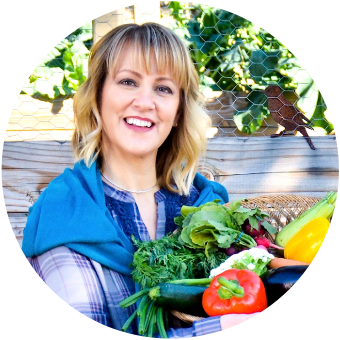
I’m so happy to have Karen Page on the blog today. She is the two-time James Beard Award-winning author, whose 300,000-copy bestselling book THEFLAVORBIBLE was named one of the 10 best cookbooks in the world of the past century by Forbes. She is a graduate of Northwestern and Harvard, and also holds a Certificate in Plant-Based Nutrition from Cornell in conjunction with the T. Colin Campbell Foundation. She lives with her chef-photographer husband Andrew Dornenburg in New York City. I am in love with her book, The Vegetarian Flavor Bible, which really is a bible of vegetarian foods.
What inspired you to write your book?
As full-time food writers for the past two decades, my husband Andrew Dornenburg and I considered ourselves professional hedonists. Flavor always came first. Then, in 2009, my father died – on the heels of my stepmother’s death in 2006, and of Andrew’s parents’ deaths in 2000-2004, all to cancer. So we could no longer ignore the headlines that dominated the news during the latter half of that decade linking nutrition and wellness. As food professionals, we were appalled to learn that the number-one cause of death in the U.S. was nutritionally-controllable diseases (e.g., cancer, diabetes, heart disease, stroke), and that our country was literally eating itself into an early grave.
Our research led us to the same conclusion as author Michael Pollan came to in The Omnivore’s Dilemma: While nutritional experts disagree about a lot, the one thing they all agree on is that a plant-based diet is best. So we decided to experiment with not eating meat in May 2012. As professional food writers, we refused to sacrifice flavor, so we set out to create a book that would celebrate how flavorful plant-based cuisine can be — and to help others learn how to bring out the deliciousness of plant-based ingredients. Thus, THEVEGETARIANFLAVORBIBLE was born, which is a 576-page A-to-Z guide to hundreds of ingredients, and the herbs, spices and other seasonings that best enhance their flavor.
What is your own diet philosophy and plant-based journey?
I have embraced a whole-foods, plant-based diet (i.e., with no meat and little to no dairy/eggs) – and am only sorry it took me so long to learn that it was possible to feel this great and to have this much energy.
The motto I suggest to others is “Progress, not perfection.” Even if you feel you can’t be 100 percent vegan or 100 percent vegetarian, the odds are that you’re likely to be a lot better off if you dramatically decrease the amount of animal protein you consume. So don’t have an all-or-nothing mentality about it – just try to eat a whole-foods, plant-based diet most of the time. And when you have the option, make more nutrient-dense choices as well, to make sure you’re getting the most nutrients possible for the calories you consume — as nutrients help to fuel the body’s self-healing mechanisms.
What are your 3 best tips for people who want to start a vegetarian or vegan diet but are discouraged because of their perceived difficulty in getting it started?
1. Just do it. As someone who grew up in the Midwest eating meat two or three or more times a day, I honestly didn’t think I could go vegetarian without intense suffering. My fears were enormous – but they turned out to be entirely unfounded. Stopping eating meat was probably the easiest, most radical change I’ve ever made – within mere days, I felt so much better that it carried me along rather effortlessly. So don’t let your fears keep you from discovering something you might end up loving as much as I do!
2. Make it pleasurable. If you love pizza, don’t think you have to make yourself miserable by giving up pizza – or burritos, or just about anything else. Eat pizza – just with whole-grain crust, topped with veggies and/or mushrooms. (Andrew and I sometimes enjoy Field Roast grain-based Italian sausage on our pizza.) We started shifting toward just a light sprinkling of cheese on our pizza, but evolved to the point where we actually prefer it with no cheese.
3. Be adventurous. Don’t get stuck in a rut by eating all the same dishes all the time. Pick a different country to eat in every night, whether you’re cooking at home or checking out ethnic restaurants. It will give you an appreciation of how different cultures have made plant-based dishes taste delicious around the globe. Sign up for a CSA box, and look up the ingredients in THEVEGETARIANFLAVORBIBLE to learn how to make unfamiliar veggies taste great.
What are your 5 favorite plant-based food ingredients that you just can’t live without?
I love all kinds of leafy greens, which are the most nutritionally dense foods you can eat. I try to eat raw salad greens and cooked greens (whether collards or kale or spinach) every single day. I also love all kinds of legumes (from black beans to chickpeas to lentils), which count as both vegetables and protein sources in one’s diet. Mushrooms have never been a more important part of my diet – they pair wonderfully with red wine, which is important to me as co-author of what’s been called the world’s best book on food and wine pairing: WHAT TO DRINKWITHWHATYOUEAT. Having just returned from a trip to southern California, I fell in love with fresh fruit again – I can’t imagine a more perfect dessert than perfectly ripe berries, maybe with a splash of Moscato d’Asti poured over them. And as we travel so much, we’re always packing our favorite snack – a trail mix Andrew makes with a variety of nuts and seeds.
What is your favorite plant-based go to, easy meal?
Any time of year, we love making our own fajitas with whole-wheat tortillas, a variety of grilled vegetables (e.g., onions, bell peppers, mushrooms, zucchini) topped with pico de gallo and guacamole, and served with rice and beans. During the winter, we especially love one-pot meals that pack a great flavor punch – and love relying on smoked paprika to add an earthy richness to a big pot of split-pea soup, or to Spanish marinated portobello mushrooms and potatoes. During the summer, there’s nothing better than a great salad that features both raw salad greens and lots of other textural and flavor elements to keep it interesting (not to mention nutritious!), e.g., smoked tofu, toasted slivered almonds, and avocado slices.
Here’s one of Karen’s favorite plant-based recipes she’s sharing with us today on The Plant-Powered Blog.
3 ½ pounds peeled new potatoes, roughly quartered into irregular-sized pieces (insert a knife point into each potato, and twist until broken)
1 quart vegetable stock
¾ teaspoon smoked paprika
ground cumin and salt to taste
fresh chopped parsley
Instructions
In a large bowl, add the Marinade ingredients above and whisk together. Add Portobello mushrooms and coat. Cover with plastic wrap, and marinate overnight in the refrigerator.
Sear the marinated mushrooms in hot olive oil, about 1-2 minutes on each side. Then add the potatoes, vegetable stock, smoked paprika, and cumin and/or salt (to taste), and simmer, uncovered, until tender.
Ladle mushrooms and potatoes into serving bowls. Reduce sauce over high heat for 2-3 minutes to thicken, and spoon over mushrooms and potatoes. Garnish with fresh chopped parsley.
Serve in shallow bowls with your favorite crusty bread and glasses of red wine from the Toro region of Spain — ideally, a Gran Colegiata Crianza or another red wine from Bodegas Farina, which enhances this dish perfectly.