

Plant Chat: Julie Mihalisin, founder of The New Health Club
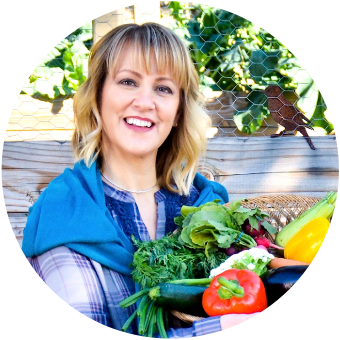


I am so happy to introduce you to Julie Mihalisin and Philip Walling, the creators of The New Health Club, which is a website concept that helps promote the plant-based movement. In fact, I am now listed as an expert on this wonderful site. I encourage you to visit The New Health Club and use it as a wonderful resource to inspire your plant-powered journey. I was really interested in learning more about how Julie and Philip kicked off this new program. In fact, their personal experience with this lifestyle inspired them to create this unique online tool. The New Health Club is an entry-level guide that simplifies the plant-based lifestyle, celebrates the plant-based community, and encourages users to explore the wide range of vetted resources by interjecting them throughout the content of the site. Now they are gathering feedback to help them move into the beta phase of their project.
With an MFA from the Royal College of Art, Julie spent her early professional life as a jewelry artist. In 1994, she met Philip Walling, who ran his own architectural arts and furniture design studio. Julie and Philip married in 1996 and began collaborating on mixed media sculpture in 1997, developing a unique style that is represented in art collections all over the world.
After becoming parents, the couple became increasingly interested in finding a purpose that was more meaningful and fulfilling. In 2010, Julie received an MBA from the first sustainable business school in the country. In 2012, the couple co-founded The New Health Club and began developing a system to help people shift to a whole food plant-based diet. Their dream is to build a scalable tool that will grow and thrive along with the growing base of scientific and social proof that the website is built upon.
How did you become interested in plant-based eating?
Philip’s doctor wanted to put him on cholesterol medication back in 2003, but Philip wanted to do it with diet. Months went by and nothing worked. Then he tried going vegan and within weeks his numbers dropped 100 points! I didn’t have any health issues, but I wanted to be supportive so I became vegan, too. I was also moved by what I had learned about the environmental impact of veganism and loved the idea of changing the world one bite at a time.
What prompted you to start The New Health Club?
Because Philip’s numbers improved so profoundly, we didn’t pay a lot of attention to nutrition. But years later it caught up with me. It was 2012, I had gone back to school to study sustainable business. Philip and I were working on a startup to teach people about water issues. The more we researched, the more we discovered that animal agriculture isn’t just the primary cause of our water problems; it’s a major contributor to virtually every environmental crisis we face today, from desertification to climate change. I had just turned fifty, was passionately dedicated to my veganism, and so sick I could hardly get out of bed. That’s when we realized it was time to dig into plant-based nutrition. Learning about all the whys and hows of eating right was quite an undertaking, but once we embraced it, we both saw immediate results. The funny thing is, we thought we were eating right. That’s when we knew that helping others shift to a whole food plant-based diet was the greatest contribution we could make.
How can The New Health Club help people who might want to break into plant-based eating, but don’t know how to take the first step?
The New Health Club is designed especially for newcomers. We start by answering three simple questions:
1) Why Eat Plants?
2) How Do I Do It?
3) Why Is It So Hard?
The answers are like cliff notes. For instance, “Why Eat Plants?” introduces “The New Food Guide”- a rating system that categorizes all food as either red, yellow or green – just like a traffic light. Green means “go”. Yellow means “caution. Red means “stop”. But we prefer to say “enjoy, limit and avoid” because we’re not the food police; and we know better than anyone that learning to eat better is a process.
“How Do I Do It?” is all about translating “The New Food Guide” into first steps. Loaded with practical ideas about shopping, eating out, reading labels and using substitutes, we created this section to help people avoid RED–RATED foods and enjoy GREEN–RATED foods. There’s also a section called “A Typical Day” that walks people through three versions of a plant-based day – from “I’m In a Rush” to “I’ve Got More Time (to hang in my kitchen)” – complete with recipes.
“Why Is It So Hard?” acknowledges some of the social and psychological issues that get in the way. And, like all the other sections, it includes excellent resources from books like The Pleasure Trap and Salt, Sugar, Fat to links to articles on everything from food subsidies to the pharmaceutical industry and how they’ve taken hold of our culture.
What’s unique about our approach is that every time you read a factoid you’ll find resources that back it up. Every time you see a recipe, you’ll be linked straight to the website where we found it. All we’ve done is create a package to make it fast, easy and fun for people to find information they can trust.
What are the goals of The New Health Club?
Our goal is to create a living database that serves as a plant-based hub that the mainstream can’t ignore. The easier we make it to use and the better job we do celebrating the community, the more appealing it will be for newcomers to understand why and how to “join the club” and start eating more whole plant-based foods.
What are the main benefits from eating a plant-based diet?
When you eat at the top of the food chain, you have a larger negative environmental impact than you would if you were eating plant-based foods. The implications for global health are just as well documented as they are for personal health. When we choose a plant-based meal, we help clean rivers, save aquifers, reduce greenhouse gas emissions, limit deforestation, conserve topsoil and save lives – human and otherwise. Voting with our dollars and choosing foods that heal over foods that harm sends a powerful message that supports this incredible cultural shift that is already underway. The prize? We get healthier too.
Tell us your 5 favorite foods you can’t live without.
Homemade sorbet from frozen fruit, whole grains with avocado and salsa, muesli with homemade oat milk, red pepper hummus, and 1000 shades of smoothie.
Note: I am not a spokesperson or profiting from these products or companies; just providing my own unsolicited opinion about popular products, services, and organizations in the food world today!