

Women in Agriculture are Awesome!
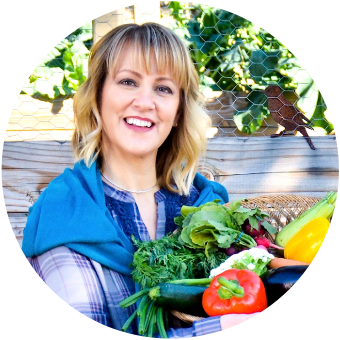


I just got back from the Women, Food and Agriculture Network (WFAN) conference in Des Moines, Iowa. What a fabulous group of women! Most attendees were farmers, but there were also many women who are active in sustainable agriculture in some way, shape or form. After listening to so many great stories on practical aspects of farming, including promoting soil health, biodiversity, and seed saving, I was truly inspired to get more involved in a healthy and just agricultural system. I have always been inspired by this part of my work. I believe that healthy food is much more than just calories, protein, carbs, and fat. It’s about how the food is grown, how it impacts communities, the land and future generations. That’s why I’m a huge supporter of organic and local food.
One of my favorite speakers at the conference was Kari Hamerschlag, who spoke on transforming the food systems. Read on for a summary of her inspiring talk.
Women, Food and Agriculture Network Conference, November 8, 2013
From Crisis to Opportunity: Connecting the Dots for Food System Transformation. Kari Hamerschlag, Senior Food and Agricultural Analyst, Environmental Working Group.
Here’s a transcript from Kari’s inspiring talk today at WFAN.
My journey started 30 years ago, when I read Diet for a Small Plant by Francis Moore Lappe, and I went to California to work with her. No book has ever had this impact on me, and it was published 40 years ago. There are two concepts that stayed with me for all of these years. First, that it’s not so efficient to rely on meat; it takes massive amounts of resources to make meat. This is the reason that I became a vegetarian. It used to be that even talking about reducing meat was taboo. You can’t address the serious water and public health issues without changing how we produce meat and how we consume it. Just in the past five years, there are so many efforts to look at meat, such as Meatless Monday, Food, Inc., EWG’s Meat Eater’s Guide, which I worked on, and the Pew report Putting Meat on the Table. We are looking at the effects of industrialized farm animals. Meat consumption is down for four years in a row, the projected per capita consumption reduction from 2006 to 2013 is beef 17%, pork 11%, and chicken 8%.
The other concept is that food scarcity is driven by agri-business’s stranglehold over public policy. Corporate power and dominance in the political system is nothing new; the economic power of industry is growing, and so too has its political power. A host of food and agricultural policies present major threat for the environment and public welfare and animals. The big question is what are we going to do about it? We can’t fix our broken food system if we don’t take back our food democracy.
There is good news: The passion for a more healthy and just food system is everywhere—there is growing support for local sustainable food in every corner of the country. People are creating a sustainable food system from the ground up. The number of farmers markets has doubled since 2005, there are 800 plus farmers markets open for business, 12,000 farm to school programs nationwide, more than 6,000 CSAs deliver to farmers and consumers, hybrid CSAs are popping up everyday, 460 hospitals and 300 universities have taken the pledge to source more sustainable food. Organic food sales has had an 8 fold increase in 15 years; with $32 billion in sales it is now the fastest growing market in the food sector. Organic acreage is growing steadily.
The USDA identified 168 food hubs working in innovating ways to get more sustainable food to the market. More women farmers have hit the scene than ever before. The number of farms run by women has tripled since 1980. There is so much to celebrate here however; there is some bad news. As far as our movement has come, 10s of thousands of farmers can’t grow quickly enough to counteract current damage of profit driven food systems. Some of their major problems include but are not limited to; Good policy isn’t doing enough to scale up all the good things, while bad policy is doing way too much to support status quo, making it hard for sustainable agriculture to compete. Bad policy is threatening gains we have made. Proposed food safety rules are a huge threat to small farmers.
Most serious problems include, the issue that food supply is a health hazard costing the U.S billions in health care, making us sick, 2/3 overweight obese, hundreds of billions treat manage preventable chronic illness, food especially meat is full of chemicals additives, nitrates, pesticides colorings, hormones, and unwanted substances contaminating our bodies and the earth. Many people don’t want these negative additives but simply have no way of avoiding them.
The richest country of world has seen sky rocketing rates of food insecurity. 78 million people, ¼ of the population live in households in food insecurity, 9% china, 48 million on food stamps, while many that are working can’t afford good food.
Poverty wages, and food workers get paid the least and are the most food insecure. Twice as many of these workers receive foods stamps as any other sector. Small number of farms, anger mega farms driving small farms out of business, dominating the way we grow and produce food is destroying our natural resources. Most foods are grown with intensive farming; vast amounts of pesticides fertilizers that end up on our water ways, which showed that we pollute our soils and public policy makes the situation worse rather than improving it.
The Farm Bill is under negotiation with the house and senate and conference committee; it is the most important bill, seeing as it provides a safety net for families struggling with hunger in this country. $314 billion is going to the SNAP government program; unfortunately, Republicans voted to slash $40 billion from this program, while expanding farm subsidies. That’s what’s happening with this Farm Bill; 20% of the Farm Bill is devoted to researching agriculture. The Farm Bill spending is totally out of step with our needs. We are told to fill half of our plate with fruits and vegetables, but only a fraction of the Farm Bill is dedicated to promotion of these foods. Most of it is subsidizing commodity crops that make junk food. We are subsidizing the wrong kind of crop production, including genetic engineering and monoculture, which is destroying biodiversity. In contrast, a tiny amount is going to support new farmers who deliver so many ecological health benefits. Programs that support organic agriculture deliver healthier carbon-rich soil, fewer chemicals in air and water; reduced exposure for workers, farmer and consumers; greater biodiversity, increased habitat for wildlife, and greater resiliency in the face of floods and drought. Most is going to large farms.
Crop insurance costs have exploded, from 2002 to 2011, the cost has gone to $9B per year, tax papers pay 2/3 of premium. Tax payers are on the hook for massive payouts, cost $17 billion to taxpayers. Crop insurance is highly concentrated, 5% of recipients take in 50% of it, while small farmers get nothing. There are no payment limits, no means testing, no disclosure requirements, no conservation compliance. 26 single farms got more than the entire organic agriculture for the whole country. The EWG Report, Plowed Under, reported on the impact crop insurance has on the environment. Millions of acres of native prairie and wetlands are being converted to farms, mostly corn and soy. It’s a travesty, and it’s happening mostly with our tax dollars.
The Farm Bill established conservation compliance, which is a simple common sense guideline requiring farmers who accept federal subsidies to take basic measures to cut soil erosion on their most highly erodible field and to refrain from draining wetlands. We must fight hard to make sure that conservation compliance is in the final bill. We must fight hard to make sure that there is a provision to reduce plowing up prairie.
There is no doubt that farmers need a safety net, but EWG believes in a reasonable crop insurance reform agenda. There should be payment limits, means testing, a reduction of premium subsidies, cuts to insurance company profits, in order to save $20-40 billion per year to invest in more worthwhile programs.
We have victories. The Senate bill has a minimal means testing that will reduce subsidies for millionaire farmers. But at a time when it’s more important than ever, Congress is cutting programs. EWG is fighting hard, but not hard enough, to make full funding for the current programs, which are not nearly as effective as possible.
In EWG’s Untapped, I did a study on how a Farm Bill conservation program can do more to clean up California’s’ water. We teamed up with other organizations, and we can make conservation programs more effective and better, with a ban on subsidies and support from dozens of organizations and more than 160 members of Congress. Too many members should have been with us who didn’t vote, but they didn’t hear from the people, we need to communicate with them to build more support.
The Local Farms, Food and Jobs Act is a bright spot. With leadership from Maine, there is increased funding for programs that support healthy food access and local regional food markets. It provides for schools to use more of their federal money for local food and reforms for credit and crop insurance. We’re not even close to exercising our political muscle on these issues so near and dear to our hearts. One answer is that it’s far easier to organize people against, rather than for something.
Beyond the Farm Bill, regarding antibiotics and meat—there is no issue in my mind that brings to light the failure of our government to put the interests of industry before people. Why has FDA not succumbed to thousands of people and organizations, such as the AMA, some since the 1970s, against antibiotics in meat. It’s all about protecting profits; it’s more profitable to raise meat with antibiotics so that you cram animals into smaller and smaller spaces.
There are three bad steps backwards for processing; the proposed USDA rule would eliminate 75% of USDA inspectors. It would increase production speed by 25%, and increase the use of toxic antimicrobial chemicals. Who profits from this? Companies stand to gain $1B more in profits over the next five years, such as Tyson, Perdue, Pilgrim’s Pride, and Sanderson Farms. Factory farms are under-regulated, they produce 1 billion tons of waste every year.
The Center for a Livable Future from Johns Hopkins analyzed this issue and instead of getting better, their report found that the problems are even worse in the last five years. Why? I think the main reason is the overwhelming influence and power of the animal agriculture industry, as at every turn you can see undue influence by the industrial animal agriculture sector; everywhere you look there’s too much influence by the industry. The report noted this effect on members of Congress.
The good thing is that we are seeing a ground swell of people who are deeply concerned about our broken food system; they are on fire about GMOs and believe they have a right to know about food. There are frassroots forces, supported by national organizations, and they are putting a leg forward on GMOs in more than 25 states. People can create market pressure and change corporate and farm practices and put pressure in the corporate boardrooms and in Washington for policy change. You can see the recent decisions, sucg as Chipotle’s announcement that they will only serve antibiotic-free meats, the Humane Society got McDonald’s to stop using gestation crates, and Target rejected GE fish. We can grow a sustainable food system by vamping up education, and also by supporting farmers out there who are producing good clean food.
We cannot shop our way out of this mess. However, there is a way to become more engaged. Educating consumers must be part of a bigger strategy that empowers consumers to get more engaged. Exposing the myths of industrial agriculture and elevating solutions that are working will increase visibility of our successes and shine the light on what’s working to solve the problem. Shout about what you’re doing, especially to policy makers and journalists. Get stories out, and more videos. The food movement needs more unity and coordination, organizing stronger networks and greater connections among women food and agricultural leaders around the country. Broaden your reach, connect with other organizations, change campaign finance rules, strengthen international policy passed in other countries for greater democracy, and opt for change. Of course to do all this, we need serious money, which is always a challenge. Funding policy advocacy is a critical strategy that requires long-term investment.
We need to make food a bigger political issue. When’s the last time you heard food or farming in a political debate, or saw someone kicked out of office because of food policy decision? Hold politicians accountable for your vote. EWG takes food policy action and gives scores on politicians over key food issues. The next step is to create food policy action committees to get good politicians in and bad ones out. In order to make food a bigger political issue, we each need to get more political.