

Plant Chat: Rodger Wasson, Farm to Table Talk
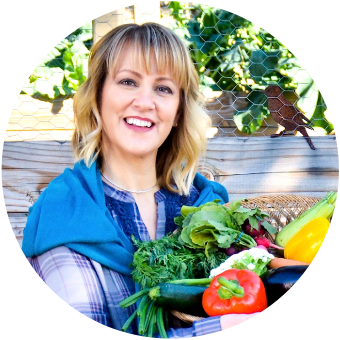


It’s such a pleasure having my friend and colleague, Rodger Wasson, on my Plant Chat today! Rodger is a food and agriculture veteran. Although he was the first of his family to leave their Central Illinois grain and livestock farm after five generations farming in America, he’s continually worked for and with farmers through-out America and around the world. He does everything from directly managing commodity boards and councils to building the strategic consultancy Idea Farming Inc. His Farm to Table Talk podcasts have been created for anyone interested in individual journeys within the food movement, the modern food system, and the stories behind our every bite. He is a graduate of Illinois State University and lives in Sacramento. Continue reading to learn more about his thoughts on modern agriculture, animal welfare, and more!
What are the primary ways in which agriculture has changed in the U.S. over the past 50 years?
Farms have gotten larger and (excluding hobby or part-time farmers dependent on off-farm income) there are fewer farmers. And they are older.
How do these changes impact the environment, animal welfare, and the community?
Larger scale farms can be better able to support sustainability and the environment with dedicated and trained staff; however, the risk is that if the large operations make a mistake, it’s a big mistake with understandably larger consequences for the community and the environment. Good management is the key to animal welfare issues. In this a case a small livestock farmer or rancher is often more able to be in tune with the welfare of the animals. Large scale farming operations may have lots of employees spread across multiple locations or even multiple states. Being sure that employees who are not closely screened or supervised are treating the animals properly is a bigger challenge of the large operations. Both large and small farms may choose to use gestation crates or not or small cages or not. These issues are not mutually exclusive to one size or the other. It is generally expected that large scale are more likely to have a factory-like approach, with increased risk of crowding. Buildings used in the large operations can be a positive, keeping animals more comfortable during extreme weather.
What is the single aspect of modern agriculture that most concerns you?
The size required for an adequate living. This is the main reason that farmers have quit and farms have gotten larger. 50 years ago, a Midwestern family could live on a a couple hundred acres with 2,000 hogs and a cow herd. They can’t today. Small specialty crop farms are showing up but they can require a lot of labor, sometimes more than 20 people for 10 acres.
How do you feel the public perceives agriculture today?
They view small, local farms, Organic or not, that supply farmers markets, CSAs, and restaurants very favorably. Do they have good knowledge of the challenges, practices, and outcomes? Most don’t.
How does the cultivation of monocrops impact the sustainability of the food system? Monocrops are overstated as an issue. For example, a large percentage of California agriculture are technically “monocropped” tree nuts, fruit orchards, olives, wine grapes, etc. and are produced very sustainably with few negative implications for soil quality. Row crops are generally rotated and managed to care for the soil. Continuous Corn and soybean production is harder to defend. Synthetic fertilizers are added to the soil and minimum tillage has become the norm, but organic matter is not what it used to be. The good news is that if soil is diminished, it can be rebuilt with crop rotation, minimum tillage, green cover crops and sometimes livestock.
Is agricultural efficiency sometimes confused for sustainability? If so, why?
Both efficiency and sustainability are relevant. Beyond just the environment, to be sustainable, a farm needs to make sufficient income to keep a farmer in business. Efficiency is not bad unless it’s confused with expediency that leads to cutting corners and harming the soil, livestock, employees or the community. Even if farming a small acreage with horses, you need to be efficient with time and resources or go broke.
When it comes to animal agriculture, what are the most pressing concerns facing our current system?
The lack of awareness about the importance of grazing ruminant livestock—too much blame for Green House Gases and too little credit for utilizing the vast majority of the Earth that is untillable. The ownership models for hogs and poultry are very concerning—more so than the concentrated beef feedlots. The trends in Dairy issues are hard to sort out.

What will it take to move the needle from our current agricultural system to a more sustainable model, which takes care of the soil, natural resources, animals, communities, and people?
The needle is already moving in every industry and in every part of the country. Industry trade organizations, Councils, Extension, Researchers and the media need to continue drawing attention to research and best practices that farmers are using for continuous improvement. There needs to be attention brought to the best and worst. It will only happen if consumers care about how their food is produced. This will result in restaurants, supermarkets and food manufacturers seeking out suppliers that are following best practices. Size of farming operation doesn’t predetermine whether they are good or bad. Large and small have both good and bad. For an informed public there should be a light shown on both.
The sustainability movement has often focused on small, organic, local agriculture within a community, but what are the limitations for this sort of agricultural system within the overall food system? Geography is the biggest limitation. Many farmers and ranchers have to live 50 miles or more from their operation, so their kids would have a school to go to let alone supply a farmer’s market or CSA. If your ranch is in the northern Plains with a 3-month growing season you can’t be expected to farm like a small, local, organic farm in California. There are some organic farms in the high Plains that will grow Organic grain if a sufficient premium price offsets the still lower yields. What are the successes of these sorts of agricultural systems? The success of small and medium size farms is that they are a way in to the business of farming that doesn’t require a million dollar combine or 2,000 acres.
What are some solutions that can be applied to make today’s modern agriculture feasible yet more sustainable?
Training new farmers to make optimal use of the land they have available. This should cover planning, management and marketing. Do you have an example you can share? Yes. The best place for names are to review the on-line and publications of organizations like EcoFarm, MOSES, Organic Farmers Research Foundation, Rodale Institute and Land Grant University Extension Sustainability and small farm centers. Their programs and communications feature successful new farmers.
What are some simple messages dietitians can communicate to their clients and the public about how they can support a more sustainable agricultural system in their daily lives?
Be curious. At your Farmers Market or CSA, ask the farmer (who is not necessarily the one who drove the truck to the market) to explain their production practices. At restaurants ask about the origin of their food and if they give you the name of the farm ask about it. At Supermarkets check out the signage and ask the staff what they know about the fruit, vegetables, fish, meat and dairy. For foods in cans and jars, check the brands web-site to see if they mention the farmers and their farming practices. Use of antibiotics, non-organic, GMO, or foreign supply should not be automatically a deal breaker but failure to provide a full honest explanation probably is a deal breaker.