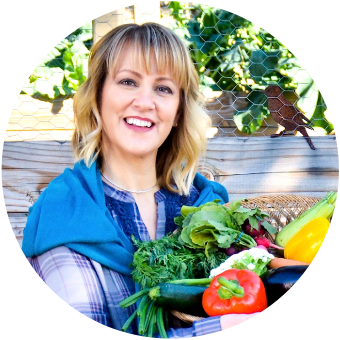
Welcome to my Plant Chat Phoebe Lapine! Phoebe has truly harnessed the power of plants to change the narrative of her physical and mental health journey. She is a food and health writer, gluten-free chef, wellness personality, culinary instructor, and speaker, born and raised in New York City, where she continues to live and eat. On her award-winning blog, Feed Me Phoebe, she shares recipes for healthy comfort food and insights about balanced lifestyle choices beyond what’s on your plate. Her forthcoming memoir,The Wellness Project, chronicles her journey with Hashimoto’s Thyroiditis and how she finally found the middle ground between health and hedonism by making one lifestyle change, one month at a time. Read on to learn more about her love of Ina Garten, her knack for adapting to the changing digital landscape, and the power of lemons. Connect with Phoebe on Instagram and Facebook for more creative clean recipes and inspiration.
How did you become interested in food and cooking?
I grew up with a mother who was an early adopter of the organic movement and was always cooking. I assisted her with menial tasks like de-leafing herbs and mixing chocolate chip cookies. But it wasn’t until college and post-college when my love of cooking took on a life of its own.
When people ask me how I ended up in the food biz sometimes my answer is: boredom. I was so starved for creativity during my first corporate job that I ended up starting a food blog on the side to feel some sort of purpose and re-find my sanity.
I got my start in the professional cooking world in the least professional of settings – quite literally, in my 6 x 4 square foot kitchen, feeding friends from a pot of chili with a measuring cup instead of a ladle. I knew I was onto something when the first piece of press about the blog hit, and then 9 months in when I got a cookbook deal.
Who are your biggest influences as a chef?
I learned the art of high-low elegance from Ina Garten. In high school, I got a masters degree in healthy comfort food from watching hours upon hours of the Barefoot Contessa on the Food Network.
When I decided to leave my corporate job to pursue a career in cooking, taking on any odd food job that came my way, I kept my prior schooling—my degree in Ina—in mind. High-low was something I hoped to achieve at every catering gig, through every bowl of onion dip elegantly reimagined.
How can amateur chefs make vegetables taste more delicious?
Start with good produce! Try to shop at the farmer’s market when you can. Local is always more important than organic when it comes to taste, and usually small farms use more sustainable practices. Good veggies prepared simply speak for themselves. Roasted root veg with sea salt is one of the easiest and most magical things you can make. No need to gild the lily there. It’s nature’s candy.
What do you think is the most essential ingredient for plant-based cooking? The most versatile?
I’m a sucker for fresh lemon juice. The basics of cooking plants are the same as anything—you have to find the right balance between flavors. Salt and acid are two musts, and lemon juice has the benefit of giving you a slight floral sweetness.
What unforeseen challenges have you been tackling as a food blogger?
Oh man—food blogging has changed so much in the last 8 years, since I started. The market is increasingly saturated, ad revenue is down, and thanks to social media, attention spans don’t convert to long-form posts the way they used to.
My biggest challenges have been trying to pivot and adapt to whatever the newest platform at hand is. It’s hard to know what will be worth your time in the long-term and not just stretch yourself even thinner in the short term. Unfortunately, it pays to be an early adopter if an app blows up. But ultimately, social platforms are not your own to control and you’ll always be at the mercy of algorithm changes and back channel coding if your business/brand relies too heavily on outside sites. I’m still trying to find the right balance and decide where it’s worth investing my time.
How did you come to craft and practice your philosophy of “healthy hedonism?”
I was diagnosed with the autoimmune disease Hashimoto’s Thyroiditis in my early twenties and spent the better part of the decade swinging back and forth from denial to obsession. Eventually I had a come to Jesus moment. The question I kept asking myself was: how can I do right by my body without giving up my life?
I define my philosophy of healthy hedonism as the art of balancing the things that nourish your body with the things that feed your spirit. Restrictive dieting may pull off the pounds and bring us closer to looking like a Greek goddess. It may even make us healthier on paper. But it can often get in the way of living.
The best way to figure out your limits – what works for your body, mind and spirit, and what despite the best scientific and spiritual intentions, may not – is to self-experiment. Which is what I did with The Wellness Project.
Can you tell us more about your book, The Wellness Project?
Absolutely! At the beginning of 2015, I decided to double down on all the self-care practices that fell by the wayside when I left the corporate world to become a professional slicer and dicer. Inspired by Gretchen Rubin’s book The Happiness Project, I dedicated a full year to making over my health one lifestyle change at a time.
I covered everything from switching my personal care products to naturals, to taming stress, to healing my gut. But the key was that I focused on just one piece of the puzzle at a time. Instead of doing all of the above all at once, I went about my wellness makeover slowly, steadily, and with the first intention being to pay attention. And I made each change in isolation so I could really tease out the impact on both my health and my hedonism.
Anyone with an autoimmune or thyroid condition will certainly find a lot to learn from and identify with. But I hope that the book gives anyone who feels overwhelmed by all the health to-do’s on the internet, permission to choose their own wellness adventure. To find practices that are worth the time, money and energy we spend on them, and a shame-free way to kick those that aren’t to the curb.
If we opened your fridge today, what would we find?
Eggs. Salad greens, especially kale and arugula. Lemons galore. Kimchi, kefir and other fermented foods—like my homemade kombucha!! 12 different types of mustard.
Could you share a recipe with us?
Yes! This is a veggie version of a turmeric braise from my book.
This two-part saffron risotto recipe couldn’t be easier or more satisfying. You can either mix in the braised vegetables or pile them on top at the end. Either way, it’s delicious. This recipe is adapted from The Wellness Project book.
Ingredients
Scale
1 bunch radishes, greens removed and halved
3 medium golden beets, scrubbed, halved and thinly sliced
1 large leek, white and green parts only, halved lengthwise and sliced into thin half moons
1 bunch carrots, peeled and cut into 1-inch pieces
4 cloves garlic, minced, divided
Olive oil
Sea salt
3/4 cup dry white wine, divided
1/4 cup lemon juice
1 small yellow onion, diced
1 pinch saffron threads
1 cup arborio rice
1 quart vegetable stock
1/4 cup finely chopped chives, for garnish
Instructions
Preheat the oven to 400 degrees F.
In a large oven-proof skillet or 9×13 baking dish, toss the radishes, beets, leeks and carrots, and 2 cloves of minced garlic with 2 tablespoons olive oil and 2 teaspoons sea salt. Arrange in an even layer (overlapping is fine), and drizzle 1/4 cup of wine and the lemon juice over the veggies. Braise in the oven for 1 hour, redistributing the vegetables once halfway through, until they are fork tender but still have a slight crisp bite.
Meanwhile, make the risotto: heat 2 tablespoons of olive oil in a large Dutch oven or deep saucepan. Sauté the onions over medium high heat until translucent, about 5 minutes. Add the remaining 2 cloves of minced garlic, the saffron threads and the rice. Cook for 2 minutes, until the garlic is fragrant and the rice has started to lightly toast. Pour in the remaining 1/2 cup wine and 1 teaspoon sea salt. When nearly all absorbed, add 1 cup of the stock. Bring to a simmer then turn the heat down to medium-low and cook, stirring occasionally until nearly all absorbed. Repeat this process, adding stock by ½ cup, until the rice is tender, about 25 minutes.
To serve, spoon the risotto onto plates, top with the braised vegetables, and garnish with the chives.
Prep Time:10 minutes
Cook Time:1 hour
Written by Rebecca Berg, Dietetic Intern with Sharon Palmer, RDN
One thought on “Plant Chat: Phoebe Lapine, Feed Me Phoebe”
I was checking continually this blog and I’m impressed! To a great degree useful info exceptionally the last part I care to such information a considerable measure. I was seeking this specific info for quite a while. Continue posting the great work.




I was checking continually this blog and I’m impressed! To a great degree useful info exceptionally the last part I care to such information a considerable measure. I was seeking this specific info for quite a while. Continue posting the great work.