

New Orleans Local Food and Farm Tour
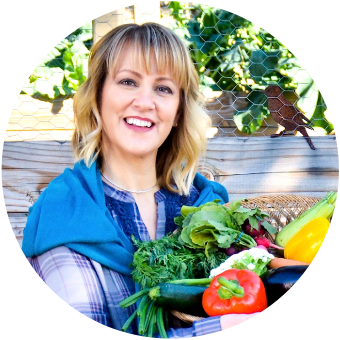


Learn more about New Orleans food and farm scene with this local food and farm tour, hosted by Sharon Palmer in partnership with Today’s Dietitian.
It was such a thrill to plan and coordinate Today’s Dietitian’s first local food and farm tour. We planned this in conjunction with the Today’s Dietitian Symposium this month, which was held in New Orleans. Since about 600 dietitians had gathered together from all over the country (and even world, hey Belize!) to attend the conference, what better time to learn about the local foods of this rich culture on a field trip.
So, bright and early on May 20, seventeen of us stepped into a tour bus to set off for a jam-packed day of exploration, as we got up close and personal with the food system in New Orleans, including its local foods, hunger organizations, school gardens, and food history.

Our first stop was to one of the city’s farmers market, the Crescent City Farmers Market, located in New Orleans’ historic Warehouse District. Director Cristina Berthelot told us all about the history of the farmers market program in the city. Unlike many cities, New Orleans is surrounded by small, multi-generational farms, with a rich, year-round growing season. We sampled among a variety of locally grown foods, including tea, berries, tomatoes, herbs, greens, rice, and baked goods.

There is such an emphasis on local foods in this town that they even dedicate the entire month of June to eating locally, with a New Orleans Eat Local Challenge, which inspires people to eat only food grown, caught or raised within 200 miles of New Orleans for the 30 days of June.


Our second stop was to Second Harvest Food Bank, which serves as the heart of a regional network of 584 partners and programs across south Louisiana. The state is home to some of the most poverty-stricken communities in the U.S. With warehouses in New Orleans and Lafayette, Second Harvest distributes 30 million pounds of food and other grocery items to 210,000 individuals each year—the equivalent of nearly 28 million meals.

Next up, a stop to see the Edible Schoolyard New Orleans in action at the Samuel J. Greene School. The ESYNOLA works to empower generations of New Orleans children to build and maintain healthy relationships with food, the natural world, themselves, and their community. Founded in 2006, the organization provides innovative, hands-on classes in non-traditional educational spaces: schoolyard gardens and teaching kitchens.
Our private tour with Michelle Rosamond, Volunteer Services Coordinator at Second Harvest, brought us into the warehouse to see the impact that donations from food companies, organizations, and individuals can make to the food security of New Orleans. We were all inspired to get more involved with hunger at home after this tour.

We were so lucky to have a private tour with Alisha Johnson, Development Manager at ESYNOLA, who led us through one of ESYNOLA’s success stories at Samuel J. Greene. Alice Waters, founder of the original Edible Schoolyard in Berkeley, California, wanted to do something for post-Katrina New Orleans, and this school was the first to attract her attention. Located in a neighborhood community, this rough and tumble school had barbed wire on the fence, but Waters said it had to come down so the children felt loved. And as the school garden grew, the children certainly grew to feel more loved, too.

Today, the school garden provides a rich, nourishing curriculum for the students at Green, as they gather together outdoors for classes among grapes, herbs, and flowers. They collect the food to bring into the cooking classroom, where parents in the community are encouraged to cook with their kids. Any leftover vegetables from the garden are gathered together and offered to the neighborhood.

Southern Food & Beverage Museum
Our last stop was to the Southern Food & Beverage Museum (SoFAB), which celebrates the food, drink, and culture of the South in a living environment, from the ethnicities that inspired local food culture, to the farmers, fisherman and hunter/gatherers that produced the food. We first enjoyed a tasty lunch at the restaurant associated with the museum, Toups South, where we feasted on a modern take on classic Southern food, including biscuits, a crispy black-eyed pea salad with cornbread croutons, and a handcrafted local cocktail, the Sazerac.

After lunch, we were so fortunate to attend a lecture and private tour of SoFab with food historian and museum founder Liz Williams. She cast a magical spell over us as she shared stories about the roots of New Orleans cuisine, including the combination of the cultures and the availability of local foods that inspired this celebrated cuisine.

For other farm tours, check out:
Take a Trip on My Austin Farm Tour
Organic Cascadian Farm Tour in Skagit Valley, WA
Peanut Farm Tour in Virginia
Really cool, just awesome!
so much informative article! Just, bookmarked it so that I can read it whenever I need! Thanks.