

Plant Chat: Nathan Runkle, Founder of Mercy for Animals
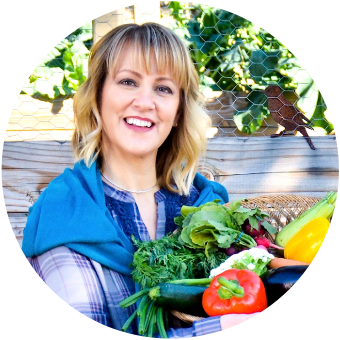


This week I’m really excited for my Plant Chat interview. Nathan Runkle stopped by my blog to talk about his journey in animal welfare advocacy. Nathan is the founder and president of Mercy for Animals. Raised on a farm in rural Ohio, Nathan has long had a deep connection with farmed animals. After a local farmed animal abuse case involving a piglet slammed headfirst into a concrete floor during an agricultural project at a nearby high school, Nathan founded MFA to give “food” animals a much-needed advocate in his local community.
Since founding MFA over a decade ago, Nathan has overseen the organization’s growth into a leading international force in the prevention of cruelty to farmed animals and promotion of compassionate food choices and policies. A nationally recognized speaker on animal advocacy, factory farming, and veganism, Nathan has presented at colleges, conferences, and many other forums from coast to coast.
Through his work with MFA, Nathan has been an outspoken advocate for animal rights, featured in hundreds of television, radio, and newspaper interviews, including on ABC’s World News Tonight, Nightline, and 20/20, CNN, and National Public Radio, and in USA Today, The New York Times, the Los Angeles Times, and the Chicago Tribune. Nathan has worked alongside elected officials, corporate executives, heads of international organizations, academics, farmers, celebrities, and film producers to pass landmark farmed animal protection legislation, raise public awareness about vegetarianism, and implement animal welfare policy changes.
VegNews magazine has recognized both MFA and Nathan for making substantial contributions to the vegetarian movement, naming Nathan one of the “25 Most Fascinating Vegetarians” and one of the country’s “Top 20 Activists Under 30 Years Old,” and twice naming MFA “Non-Profit of the Year.” In 2009, at the age of twenty-five, Nathan became the youngest person ever inducted into the US Animal Rights Hall of Fame.
Continue reading to learn more about Nathan’s work and how he fights to protect animal rights.
Tell us a little bit about your program, Mercy for Animals?
Our mission is to prevent cruelty for farm animals in our international program. We work in 4 main program areas: under-cover investigations, sending people into farms to document horrible conditions; corporate outreach to get major retailers to move away from inhumane farm practices; legal advocacy for better legal protection of farm animals; and education—we want to encourage people to move towards a plant-based diet.
What inspired you to found Mercy for Animals?
I founded it 17 years ago when I was 15-years old. I was born and raised in a small crop farm in Ohio, our family had four generations as crop farmers, and my family still has a farm today. It was a baby piglet in my area that led me to start my organization.
I went to school at Graham High School, which had a future farmers of America class. My teacher was a pig farmer, and for our dissection project the teacher killed baby piglets on the farm to bring to class for that morning’s dissection, but one of the piglets was still alive that morning. A student in the class grabbed the living piglet by the legs, and slammed it on the ground, and its skull fractured, but the pig was still not dead. All of the students witnessed this appalling action, and we grabbed the pig and went to another teacher in the school who was a vegetarian and we knew cared about animals. The teacher went to the vet and had the piglet euthanized. We then went to the sheriff’s department and filed an animal cruelty complaint. The case went to trial, but the charges were dismissed because the pig had no legal rights. In Ohio, the cultural practice of thumping—hitting the head of the animal on the ground to kill it—was exempt, and this was a common practice in pig farms.
As a teenager, I knew we needed to have an organization to speak up for farm animals. If this had been a puppy, I know the reaction might have been different. The treatment of farmed animals is so different than pets. It was definitely an evolution; the organization is still very much evolving. Seventeen years ago, there was no Facebook, Twitter, or YouTube, and it was far more difficult to get an organization off the ground as a teenager, not old enough to even drive, before social media. For the first 6 years, we were just in Ohio. By 2009, we were working on a more national level, doing under- cover investigations in California, Minnesota, and North Carolina, so it was probably a good 8-9 years before the organization was at the national level, and began to grow and take more of the shape it has today.
What accomplishments within Mercy for Animals are you most proud of?
Quite a lot, to be honest. First of all, we are proud of the number of people that our work has reached to go vegan or reduce meat consumption—literally millions of people. Our online videos got a quarter billion views this year, 2 million people actively pledged to go vegetarian on our websites, and 2 million pieces of our vegetarian literature has been distributed. A new study found that 12% of millennial identify as vegetarian, which is up from 4% among baby boomers. Cultural change is happening, and we are definitely reaching the tipping point, and we are waking up to the power and consequences of our food choices.
One success that we’re proud of is that we campaigned for 3 years against Walmart to get them to eliminate the worst factor farms abuses, specifically keeping pigs in gestation crates. We protested and had celebrity involvement and petitions. And Walmart announced that they were going to let the pigs out of their cages, as well as the chickens. This is historic, as Walmart is providing 25% of the groceries in this country, and it will make a big impact to reduce the suffering of tens of millions of animals every year. We also got first ever felony conviction for the abuse of birds raised and killed for food.
I have a problem watching the videos showing farm animal abuse. What do you suggest for people who care about farm animal welfare, but don’t want to see these images?
The power of videos is incredible; if they bother you, you don’t need to watch them, but you can share them. Social media is all about having a circle of friends, and they look to us for what we are doing, what is acceptable, what our views are, and we do have a circle we can influence. We hear from people every day who have changed their views based on undercover videos they’ve seen online. The most powerful tool that the movement has, short of standing on the slaughterhouse floor, is videos. The meat industry knows how powerful these videos are, and they are trying to pass ag gag rules, which restrict people from taking pictures in a farm.
Both of my parents grew up on farms, and they watched these farm animal videos and were appalled. They both say that in their generation these sorts of abuses never happened, that farmers were proud of caring for their animals. What do you think about how animal agriculture has changed?
I talk to my dad and grandmother about the shift in agriculture, and it’s striking. My grandmother’s father refused to put pigs in gestation crates when they started in the industry. He had a connection with farm animals, and the face of agriculture has changed in just a generation or two, in the scope of human history it’s a very new thing. There are so many issues today in animal agriculture, such as the overuse of antibiotics and environmental problems. As the population grows, if we eat more meat we can’t sustain this system.
What about farm animal practices in other countries? I have heard that conditions are very bad in China.
Yes, that’s why we set up an office in Hong Kong and set up staff there as an entry point into China. Meat consumption is growing there; given their population size and lack of animal protection laws, it’s an important piece of the global discussion. We are dedicated to doing everything we can to provide relief to farmed animals in this region, but we are the beginning stages. There are various restrictions on investigations and information distribution there, but we definitely see the need to make progress.
Do you think the message of establishing humane conditions for agricultural animals is beginning to resonate with people?
I think that there’s no doubt that farm animal protection and veganism has gone mainstream. Generationally, we understand how much of a shift that is, they say a tipping point on an issue is when 10% of the population catches on, and that trajectory is very clear. We are really seeing it on every measurable front, with the rise of vegan companies in the marketplace and the world’s largest meat company, Tyson, making a huge investment in the plant-based company BeyondMeat. If it’s not a sign of the times that vegan protein is now the thing of the future, I don’t know what else is!
There are many changes on the corporate policy level in the last year and a half. Companies are taking hens out of cages and pigs out of gestation crates. Massachusetts is bringing on a legislative ban on animals kept in cruel confinements. We are seeing evidence on every front, from corporate to legislative to consumer, that the issue has come to its time. We are only going to see a bigger change to come. People want to be kind; if they are given a choice between immense suffering and cruelty or being kind, people want to choose the kind choice. It’s just a matter of informing them about choices and giving them the opportunity of kindess over cruelty. Over 90% of Americans believe that all animals, including farm animals, deserve protection against abuse. It’s just a matter of bringing Americans’ views and values into alignment with their actions.
What is the number one concern you have right now in animal agriculture?
In the US, there is a lot of progress to get hens out of battery cages, and we’ve been fighting against the cruelty of keeping birds in these cages for about 15 years. It’s hard to imagine that birds are in a cage the size of a folded newspaper with 5 other birds, but we are really just seeing a sea change on this issue in the last year. And we are bringing progress to other countries, where hundreds of millions of hens are kept in these cages, primarily in Mexico, Brazil and Hong Kong.
The next wave is what we’ve been doing for about 3 years, but we’re stepping it up—the treatment of broiler chickens. These make up 95% of the land animals we raise and kill for food. They are “Frankenstein” birds, as they are genetically manipulated to grow so large and so fast that they can’t walk, and they have leg problems, and heart attacks, because of their changing genetics. We are working on giving them more space, natural lighting, environmental and enrichments, as well as the cruel way they are slaughtered. The way in which they are killed would be illegal if they were cows or pigs—they are put in shackles while conscious, their throat is slit, and they go to a scalding tank. We would like to move to using inert gas so that they are put to sleep before they are ever touched by workers, so there is no abuse in their final moments.
After that we are concerned with fish welfare. When we look at all animals, including those in the water, fish is where the animals are really suffering. Media doesn’t care about what’s going on in fish slaughterhouse investigations. Of course, fish feel pain—they may look different than us or mammals, but their lives matter, and they have rich lives. The average American eats about 6 farm raised fish per year, and it takes up to 2 years to reach maturity, during which they are kept in farmed conditions for the duration, where they are suffering, living the longest most miserable lives out of farmed animals.
How can people get involved to promote greater animal welfare in their everyday lives?
First, become a member of Mercy for Animals or other organizations, which is funded by donations. One easy, meaningful way to get involved, is to follow us on social media and share content, which is a simple comfortable form of activism, but can have huge impacts. Get involved on the social media platforms. We have a Hen Heroes group, where people can sign up. And we also have a writers group called oINK; we encourage people to write to editors about things that are happening. We do grassroots work across the country, we are in over 40 cities, and we have an activities page on our site. When we have an event happening, you can come out and support it. The number one thing you can do is to look at your own diet and move towards a plant-based lifestyle.
What are your six favorite plant foods that you can’t live without?
Tempeh, bananas, hummus, kale, mixed nuts, and apples.
Can you share your favorite plant-based meal?
I love veggie burritos piled high with everything you can imagine, beans, rice, tofu, guacamole, lettuce, habanero chiles—it’s all wonderful.
This piece, reading it on Thanksgiving Day, relly got me thinking about my lifestyle and how our personal choices can make a big difference. Thank you for the inspiration.
I really support your work Nathan – I hope to support you & this important movement more in the near future. Be safe & blessed!!