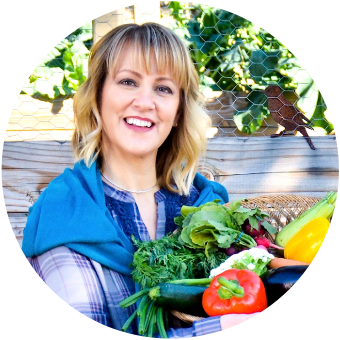
It’s wonderful to have Kristie Middleton on my blog today! Kristie is the senior director of food policy for The Humane Society of the United States. She has helped dozens of corporations, hospitals, and other institutions improve the plight of farm animals through humane-minded purchasing programs. Today she oversees the HSUS’ meat reduction efforts. She has worked with some of the nation’s largest school districts, including Los Angeles Unified School District, Detroit Public Schools, and Boston Public Schools, to implement Meatless Monday. Her work has been covered by national media, including The New York Times, Los Angeles Times, and CNN. She completed a certificate in Plant-Based Nutrition from T. Colin Campbell Center for Nutrition Studies in August 2014. Kristie lives with her husband Mark, a dog and four cats in Oakland, California. Continue reading to learn more about her passion for animal welfare and plant-based eating!
What was your path to getting involved in animal welfare as you are today?
I grew up with three dogs—Tinkerbell, Pete, and KC. They were members of my family and I loved them dearly. My love for animals was like that of most Americans, and so was my diet. I grew up eating Kraft Macaroni and Cheese, McDonald’s cheeseburgers, and Chick-fil-A nuggets. I didn’t connect the dots between my love for animals and my diet until I was in college. A marketing professor discussed euphemisms and how we often use words to describe things to make the meaning more appealing. She asked us how appealing it would be to eat “chicken nuggets” if we instead called them “flesh of dead animals.” It may or may not have been her intention, but those words impacted me. When I’d sit down to eat a sandwich, I started thinking about eating the “flesh of dead animals” and couldn’t do it. So I became a vegetarian. Though I became vegetarian, I was very ignorant about the way animals are abused in our food system. The more I learned, the clearer it became that if I wanted to align my love for animals with my diet I should become vegan. I’ve been advocating for animals ever since.
How powerful is the message of meat reduction to animal welfare?
It’s exciting to see the impact individuals who are reducing meat can have on the number of animals factory farmed. According to meat industry trade journal Meatingplace, “70 percent of meat eaters substituting a non-meat protein in a meal at least once a week and 22 percent saying they are doing it more often than a year ago.” This is coming from the meat industry itself–that’s huge! Over the last half century, the number of animals raised for food in the U.S. has steadily increased capping off at 9.5 BILLION in 2007. Over the past eight years though, in spite of the population increase, the number of animals being raised and slaughtered each year has gone down by about a half a billion. That’s because more people are shifting their diet away from eating animals. Whether they’re doing Meatless Monday, becoming flexitarians, vegetarians, or vegans like myself, the trend away from eating animals is getting stronger and stronger with each passing day.
How does your work at HSUS help reduce suffering of farm animals?
By helping institutions reduce the amount of meat they’re serving and replace those meals with delicious plant-based alternatives, we’re helping reduce the number of animals factory farmed and slaughtered. A single institutional policy can make a dramatic impact. Take Los Angeles School District for example. Serving 700,000 meals a day, it’s the nation’s second-largest school district. We estimate its Meatless Monday policy to spare roughly a million animals from factory farms and slaughterhouses.
How long have you been eating a plant-based diet?
I became a vegetarian 20 years ago and vegan 18 years ago.
Do you feel that the message of plant-based eating is starting to catch on in a mainstream way, and why?
Absolutely! I’m encouraged every day, especially to see even major meat companies are producing plant-based meats and advertising them in meat industry trade publications and schools across the country signing up for HSUS’s plant-based culinary trainings. But don’t just take it from me. Take it from food industry trade publications like FoodService Director which said one of the top menu stories for 2015 was that “Vegan went mainstream.”
What inspires you every day?
I’m inspired to recognize we’re making progress. I’m confident that future generations will look back in utter shame at how we’ve abused animals. When that happens I will know I did my best to help animals and that I didn’t sit idly by. I’m inspired to see new institutions reducing meat every single week – it’s a signal we’re winning. And I’m inspired to know there are so many hardworking, smart, compassionate people who are working hard to end animal cruelty and bring about a more compassionate, healthy, and sustainable world.
Tell us what foods we might find in your refrigerator and pantry?
I love getting a community supported agriculture (CSA) box from a local farm. I’m so fortunate to live in Northern California where fresh fruit and vegetables abundant. What’s in my refrigerator depends on the season. Right now you’ll find spring vegetables like asparagus and artichokes, snow peas, greens, and strawberries. I love beans and legumes for clean protein. Udon and soba noodles are on hand too for a quick dinner of noodles, vegetables and edamame.
What is your best tip for someone who would like to take on a plant-based diet?
It doesn’t have to be all-or nothing. While I have friends who became vegan overnight, I didn’t nor did most people I know. Start by taking steps that work for you – try eating vegan before six like Mark Bittman suggests, or try a Meatless Monday, then add in Tuesday through Friday. Soon you’ll find it’s really easy and satisfying and it’ll stick. And get a friend or two to join you. Studies show that we’re more likely to be obese when a close friend or spouse is and the opposite is true too!
Make the marinade: combine the pickle juice and soy sauce or tamari. Slice the tempeh lengthwise and place into a shallow container. Pour marinade over and allow to soak for 30 minutes to an hour. The longer the better.
Meanwhile, make the sauce: combine the mayonnaise, ketchup, and relish in a small bowl and stir until fully combined.
Make the tempeh: After your tempeh has sufficiently marinated, add water to a pan to cover the bottom. Steam fry the onion in the water until translucent. Add the tempeh and the marinade and cook for ten minutes, flipping occasionally and adding small amount to ensure it doesn’t stick.
Assemble the reubens: Spread 1/4 of the spread on 4 slices of bread sandwich or wrap, add cheese, if using, and sauerkraut then the tempeh. Toast in a 350 degree oven for 10 minutes.
Notes
*Needs 90 minutes to marinate
*Pro-tip: If you’re short on time or just don’t like cooking, skip the tempeh and the marinade (pickle juice, tamari, and onions) and pile a sandwich high with your favorite plant-based deli slices, i.e. Tofurky or Field Roast. You can enjoy this delicious classic sandwich in a fraction of the time.