

Plant Chat: David Yeung, Founder of Green Monday and Green Common
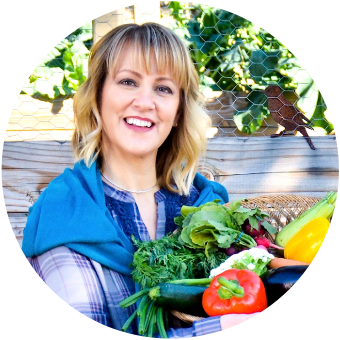


I am so happy to have David Yeung, Co-Founder of Green Monday and Green Common, on my blog this month! David is from Hong Kong, and is an engineer-turned-business owner. Green Monday is a social venture that aims to tackle climate change and global food insecurity by making low‐carbon and sustainable living simple, viral, and actionable. Their innovative platform, which consists of public advocacy, impact investing, corporate consulting, and specialized retail, provides holistic and versatile solutions that empower corporations, academic institutions and general public globally to build sustainability awareness and a responsible economy. According to David, the name “Green Monday” comes from the idea of welcoming a change of pace in the mind and the body, and you can do it 52 times a year! At the beginning of the week, when intentions, plans and expectations are set, having a Green Monday symbolizes a wholesome start. Fast Company named Green Monday “China’s top most 50 innovative companies in 2014”, and Green Monday has now spread to the US, Mexico, Italy, Finland, and the UK.
When I heard about Green Monday, I knew I had to include David on my blog! It was so fun talking to him when he visited LA. David is so full of passion and enthusiasm, and I know you’ll be hearing all about him in the coming year.
Tell us a little bit about what you are doing in the plant-based world.
There are two main things we are doing that are worthwhile. One is the Green Monday movement. Now thousands of restaurants, companies, corporations, and schools; and millions of individuals have already joined into the movement. Green Monday is quite a phenomenon that has led to behavior change. We are not just talking about eating plant-based food one day a week; it’s not just publicity or promotion, we are making change happen.
Then the second thing is Green Common, which is a plant-based food emporium. Right now there are two in Hong Kong and the main one is a megastore, with a supermarket, cooking classes, florist, and more—it’s a one stop emporium serving all of the plant-based needs, whether dining or learning how to cook plant-based vegetarian dishes. It’s the world’s first plant-based food emporium.
What was the inspiration for Green Monday and Green Commons?
I am the founder of both of these programs, and I am a 15-year vegetarian. That is how I got started; clearly I am a vegetarian and I know the main barriers and obstacles when we want more people to join a movement to eat more green and sustainable. To me it’s more than just raising awareness; it’s not just what is wrong with the meat industry, it’s what is right with a plant-based diet. I wanted to facilitate and enable people to change. My background: I am a entrepreneur, and I have numerous start ups and run various companies; I have run my own NGO and site on boards for nonprofits. I understand that I can use business as a way to do social good. Three and a half years ago another friend who is vegetarian created a social venture, and finally after playing around with other ideas, we took this idea of Green Monday and ran with it. Because of our vegetarian background, and as an entrepreneur, we gave it a foundation and roots for what Green Monday has become today—it has a business side, as well as a typical foundation or charity side.
Is Green Monday and Green Common going international?
Green Monday started in Hong Kong, but it became international and that is why I am coming more often to other countries. We are in the US, starting with schools, such as Columbia, UCLA, and Washington University. Major universities have now launched Green Monday programs. We are in the US, but we are also building in many other countries, such as Mexico, UK, Finland, Italy, Japan, etc. It is growing and spiraling out. Green Common is based in Hong Kong, but we are also planning on opening it around the world, and making it a plant-based food emporium. The emporium is 6000 square feet!
What are your goals with Green Monday and Green Common?
The key is that I always say that the vegetarian movement has four critical obstacles to overcome—these are key. First, clearly the lack of choice, people think it means eating only salad, and that there are no choices. Second is accessibility or convenience—if you have to drive 50 minutes to get vegetarian food, that’s too much. Or if people can’t find anything at their cafeteria, school, or corporation, that’s not good. Third, generally people have a misperception about the taste. They interpret vegetarian food as not tasting good, that it’s boring and not tasty. Fourth, people think there is a lack of nutrition, such as not enough protein. By having the emporium, people can experience the whole thing. They can come in, and see that the food tastes great, and that the supermarket has so many choices. They realize that eating plant-based is not boring or limiting. Last but not least, they see that the foods are filled with nutrients and wholesome. We went to solve and address these barriers by breaking it open and appealing to the general public. If they don’t know about the benefits, they can still come in and have a good meal, get good grocery shopping, and learn how to cook in the studio learn. Always people are interested in this. It’s not just a restaurant, and it’s not just a cooking studio.
What is going on in the plant-based movement in Hong Kong?
The truth is that we’re a bit behind in Hong Kong; we’re not up to speed. We are behind, compared to Los Angeles, San Francisco, or London. But we have become a kind of catalyst, so we’re not behind anymore. The reason is how we approach Green Monday—we never use a blaming, shaming or bashing approach. We don’t go out and attack the meat industry and meat eaters. We’d rather encourage them with baby steps to change and live a healthier life and eat in a more sustainable manner. We are able to sign up corporations and schools to support Green Monday—when we have one company and one university, it filters down to 50,000 employees or students in a school. We are making it very friendly and easy to adopt this movement. We are signing up major stockholders. We are leveraging this platform in Hong Kong to become a leader in plant-based food in Asia. Traditionally Taiwan has had a lot of vegetarian people as well as India, more because of tradition or culture or religion and less for the environment and health standpoint. But we are beginning a new interpretation that any company, regardless of religion or cultural background, can join Green Monday. When talking about plants and sustainability, there is a universal interest. We are breaking those silos and becoming a platform that anyone—a school, celebrity, or company—can join and should join. It’s just baby steps—one day a week.
Are there any other aspects about Green Monday that go beyond eating?
We are not just purely promoting meatless eating as a gateway into a generally healthy and sustainable lifestyle. We are not just limiting it to choice of food. We are talking about other aspects of sustainability. For example, we do not sell plastic bottled water; we offer a water machine for free refills so that you can bring your own bottle. Of course, it’s one way to educate people to reduce plastic usage. We have recycle bins, not for just plastic or aluminum, but for recycle bags. You can reduce bags by donating plastic bags. There are many green ideas that we put into practice and implement beyond just purely plant-based food.
How is the plant-based eating movement doing in Asia?
We are talking about a very serious problem; more and more countries in world, China included, are becoming more prosperous and developed. People are well off, and they have more economical spending power to eat and live more extravagantly. Which, in itself, you can’t blame them. However, the problem is we only have one planet, so we can’t live like Americans do. Our world can’t support everyone to live the American lifestyle and drive SUVs and eat steak every other day and burgers every day. Earth cannot support that. When we grow internationally, China is clearly one country we plan on doing work with very soon. However, there are 1.3 billion people so it will be a tall task. The data are alarming on the rise of meat intake in China; as people are more well off they want to live more extravagantly. There are issues of food safety and factory farms started putting more chemicals into food. The food becomes more and more unsafe.
How does the US play a role in Green Monday?
It’s the West Coast to the entire nation, and then from the US to the entire world. US plays an important role in influencing the world, and not just in movies. It’s hollywood, fashion, and culture—US is a bigger exporter of culture. That’s why when it comes to food and lifestyle it’s one of the reasons I’m doing a lot of work in the US. The US not only influences locally, but internationally. When they see, for example, what Stanford University does it impacts the world. A Stanford, Columbia or UCLA, globally people look up to. These places are leading thoughts around the world. At Google or Facebook or Ebay, they are leading change, and companies in the world will follow.