

Plant Chat: Non Kohler, Grist & Toll
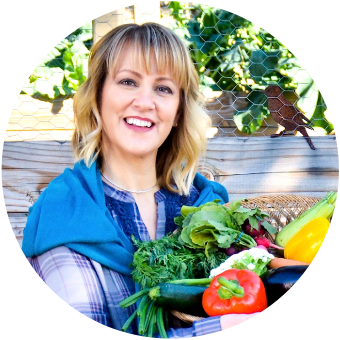


Nan Kohler is the co-owner and baker of Grist & Toll, an urban flour mill in Pasadena, California. Grist & Toll has been named a leader in the whole grain stone milling movement taking place in southern California. Grains are selected based on their provenance, baking qualities and flavor profiles. The majority of the flour comes from locally sourced, organic grains, with a selection of offerings from around the world, as well. The mill, which comes from Austria, grinds flour daily so that you can purchase a variety of freshly ground grains to produce your own artisan bread products. Keep an eye out for Grist & Toll products at local bakeries and restaurants in the southern California region.
What inspired you to build a grain mill business?
As a baker I became more and more interested in working with many different types of flour and grains. I love experimenting, and the more I baked with different flours, the more in tuned I became with how I could add new flavor and texture dimensions to what I was baking. When my business partner, Marti Noxon, and I first started brainstorming about creating a new bakery or baking-related business, I had just revisited an old Tivo’d episode of a food show. The show revolved around baking and what jumped out at me that I hadn’t really paid attention to in the past was something that happened at the very beginning of the show. They went down the road to the local mill do discuss with the miller what they would be baking that day and what he might recommend for them in the way of flour. A huge light bulb went off and I began to wonder why we no longer had local mills or freshly milled flour. The research phase began and a little over 2 years later, here we are.
What types of products will be offered at the mill?
The main focus will be on freshly milled flour. I am seeking out landrace wheat and other heritage grains. I will mill them, of course, but I will also sell the whole berries. I love cooking wheat berries, spelt berries and farro and incorporating them into savory side dishes or cold whole grain salads. In my retail shop, I have also begun to feature other local artisans, such as Skamokowa Creek, which produces beautiful one-of-a-kind bread boards, cutting boards and rolling pins. On my retail days I am also supporting the bakers in my community who have their cottage food licenses and are launching startup baking businesses, such as Joseph Abrakjian of Beyond Bread and Mark Stambler of Pagnol Boulanger, as well as local jam and honey vendors. Ultimately, I hope to include an assortment of other baking related goods such as cook books and baking tools and supplies.
Are there any qualifications a bakery or restaurant has to meet in order to sell your products?
No. It was very important to me that I find a location that was pretty centrally located and accessible. I believe that anyone who is interested in baking or cooking with whole grains and freshly milled flour should have access to it.
How does Grist & Toll practice sustainability?
We are seeking out and partnering with farmers who understand the long-term necessity of farming sustainably. That means we look at more than just one growing season of wheat so that the continued rotation of crops is sustaining the land. By encouraging the planting of landrace wheat, we are also trying to add to our sustainability by growing grain that is more drought tolerant than modern wheat varieties. Ultimately, we want to be milling as much locally grown wheat as possible, but we are definitely focused on whether or not we still have the right growing conditions in Southern California to make it a long-term sustainable practice. I believe we do, but only time will tell us whether or not it will be “greener” to put some grain on a train from Montana. We have much higher land costs and water costs in Southern California than other wheat growing regions. Small scale grain growing is much more expensive for the farmers here and this needs to be a viable business endeavor for everyone in the chain from the farmer to the consumer.
Where does the name Grist & Toll come from?
The words grist and toll are old milling terms that in a simplified way describe the process of how wheat becomes a loaf of bread or baked good. Flour mills were natural epicenters in growing communities, to which local and distant farmers would travel with their “grist”, or grain harvest. Once the grist had been milled, the miller would take his “toll”, an agreed upon percentage of the flour, in lieu of wages, as would the community baker, who would then take the freshly milled flour and create loaves of bread. Depending on where you lived or the sophistication level of that society, as many as 8 tolls could be taken on the wheat. In France they had separate “bolting” or sifting facilities which would take the single pass wheat from a mill and sift it to varying degrees of fineness in order to create pastry flours. They were allowed to take a toll as well.
What’s your favorite grain and why?
That depends on the day of the week and what I am baking! I am really enjoying working with Sonora right now. It has a beautiful creamy gold color and sweet aroma. I am milling this as a whole grain flour, but it is not like conventional whole wheat flour. It has softer protein and gluten qualities and makes very delicate and delicious pastries and baked goods.
Why did you choose to open a grain mill in Pasadena, California?
In the end, I think Pasadena chose me. I looked for over a year and a half for the right location. The commercial real estate market has been on fire even though our housing market has been suffering. Listings would come up and seemingly be gone in a blink. I kept being forced to widen the search parameters! Pasadena does not have many small pockets where the zoning allows for light manufacturing, so even though I was very interested in locating my business in Pasadena, nothing ever seemed to come up on the listing searches. I had just lost out on 3 location bids when this unit popped up on a search. I immediately drove over to check it out and contacted the listing agent. I couldn’t be happier. The tenants in our little 8-unit complex have been incredibly supportive and interested in what I am doing, and I continue to meet more and more startup food entrepreneurs who are located in or near Pasadena, so something really great is happening here.
Can you tell us about the organic seed you use for milling, Triple IV?
I’m not sure I can technically say the seed was organic. I know that it was organically grown, but I doubt the seed was certified organic. I would need to go back to the farmer to check that. I think he got the seed from a farmer friend of his. Triple IV is a modern wheat. If you look in past California Wheat Commission bulletins, it was grown in several regions, but isn’t really planted anymore. Tom Shepherd of Shepherd Farms in Santa Barbara is the grower, and he has been farming organically since 1973. He certainly did something right, because he sent a sample of his wheat to the California Wheat Commission lab and it had very impressive bread baking test results. Several local bakers have been baking with it and bringing me samples – incredible!
What’s so special about the grain mill you imported from Austria (Why did you have to have it)?
Smaller production milling equipment is very difficult to find. Since this craft is not really being practiced in the U.S. anymore, you have to go to Europe, where bakeries are still milling their own flour, thus the need still exists there for milling equipment that can be used by very small or very large production bakeries. The company that made our mill is family owned and creating these special mills is all they do. I specifically wanted a stone mill, or grist mill as it is also called, with horizontal stones, because I am approaching this in a very hands on, purist’s manner. My mill is perfect for whole berry milling (which means I am not trying to separate the bran and germ from the endosperm as large corporate milling operations do), which mills everything together, preserving all of the wheat’s nutritional value as well as creating flour with superior flavor, color and texture.
What is your #1 goal for Grist & Toll as the company becomes a leader in the local grain movement?
My #1 goal is to first and foremost bring a product to the market that is of the utmost quality and integrity. My bigger picture, most important long-term goal for Grist & Toll is to create an interactive community of growers and bakers that is centered around a local, sustainable grain hub for Southern California.
What are the benefits of using milled grains, such as you offer, compare to store bought flours?
Wow! That’s a loaded question! There are so many differences and benefits. First, I can’t overstate how amazing it is to bake anything with flour that was freshly milled. Freshness and how that amplifies flavor and texture was the first big revelation for me. Equally important is that milling the whole wheat berry is the only way to give you a real whole grain product. Whole wheat flour that you buy on the grocery store shelf is not a whole grain product. We are learning more and more about the benefits of adding more whole grains to our diets. Being local also introduces a new level of transparency which guarantees a higher quality standard. At Grist & Toll you know who milled it, when it was milled, how it was milled and where the grain comes from.
Do you feel that there as a consumer interest to return to freshly milled grains?
Yes, absolutely! I have only been open for retail a few days so far and the genuine interest and excitement from the customers I have met has been amazing and very validating. Freshly milled grain is without a doubt the big missing link in the farm to table movement and it’s way past time we all had access to it.
Grist & Toll, 990 S. Arroyo Parkway, No. 1, Pasadena, California
Visit gristandtoll.com.
If you’re interested in using freshly ground whole grains in baked goods, try them in my Pumpkin Pecan Spice Pancakes